
Key Takeaways
- Your seasonal colour type (spring, summer, autumn, winter) determines which hair colour tones and highlights will naturally complement your complexion
- Your skin undertone (warm or cool) guides the choice between golden, copper or ashy, silver tones
- Grey hair changes your colour profile by automatically cooling your natural palette, adapt your clothing and makeup choices accordingly
- Technical tone indicators (the numbers after the dot: .1, .3, .4) indicate the temperature of the colour and must match your season
- Consulting a professional remains essential for significant lightening or dramatic colour changes
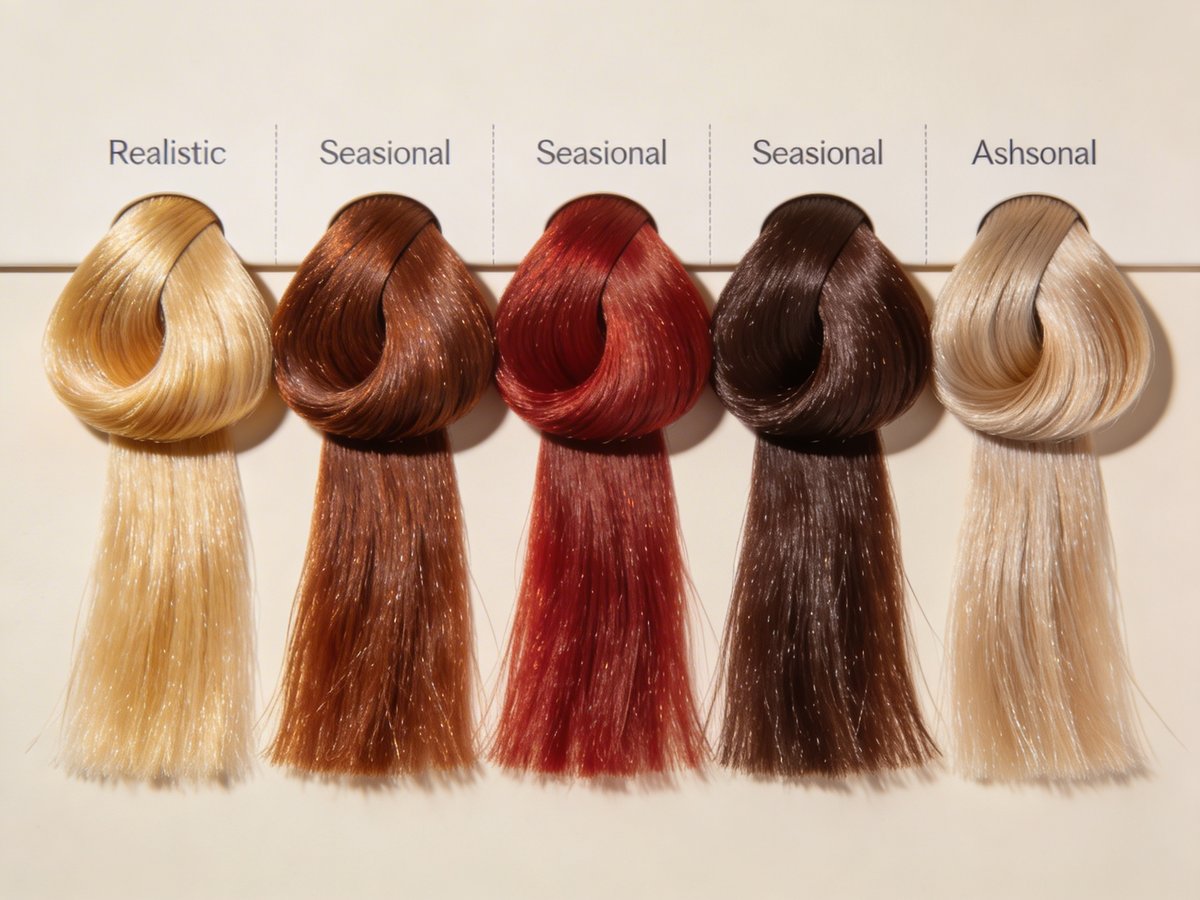
Choosing a hair colour that truly suits you is far more complex than showing your hairdresser a photo of a celebrity. The season's trending shade is not necessarily the one that will most flatter your complexion, and finding out what colours suit you best for your hair requires understanding your colour analysis. You may be wondering: "How do I know which hair colour matches my colour analysis?" We're here to explain how to apply the principles of seasonal colour analysis to your hair colouring choices, so that your hair naturally enhances your complexion rather than dulling it.
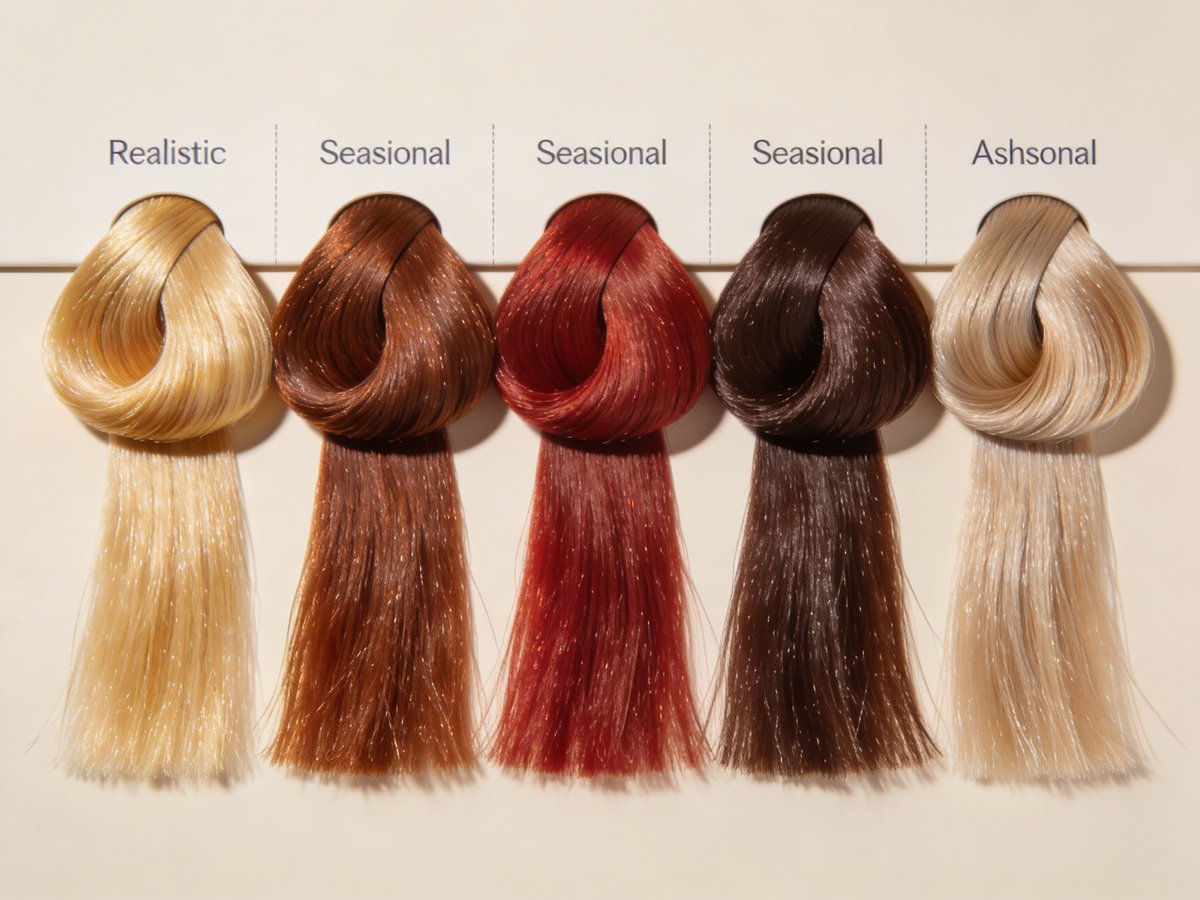
Personal colour analysis examines the harmony between your skin tone, eyes, and hair to determine your "season": spring, summer, autumn, or winter. Each season has precise characteristics in terms of temperature (warm or cool) and intensity, which point towards specific colour families. Applying these principles to your hair colouring produces a coherent, flattering result, where your hair colour creates a naturally radiant effect on your face.
How to determine your colour analysis for hair
Before choosing a hair colour, it is important to establish your seasonal colour type. The colour analysis process examines three key elements, your skin undertone, eye colour, and natural hair depth, to determine which colour families suit you best. Unlike the technical analysis practised by colourists (which concerns tone levels and bleaching bases), this personal skin tone analysis identifies the colours that create a natural harmony with your complexion rather than clashing with it.
The undertone test: warm or cool?
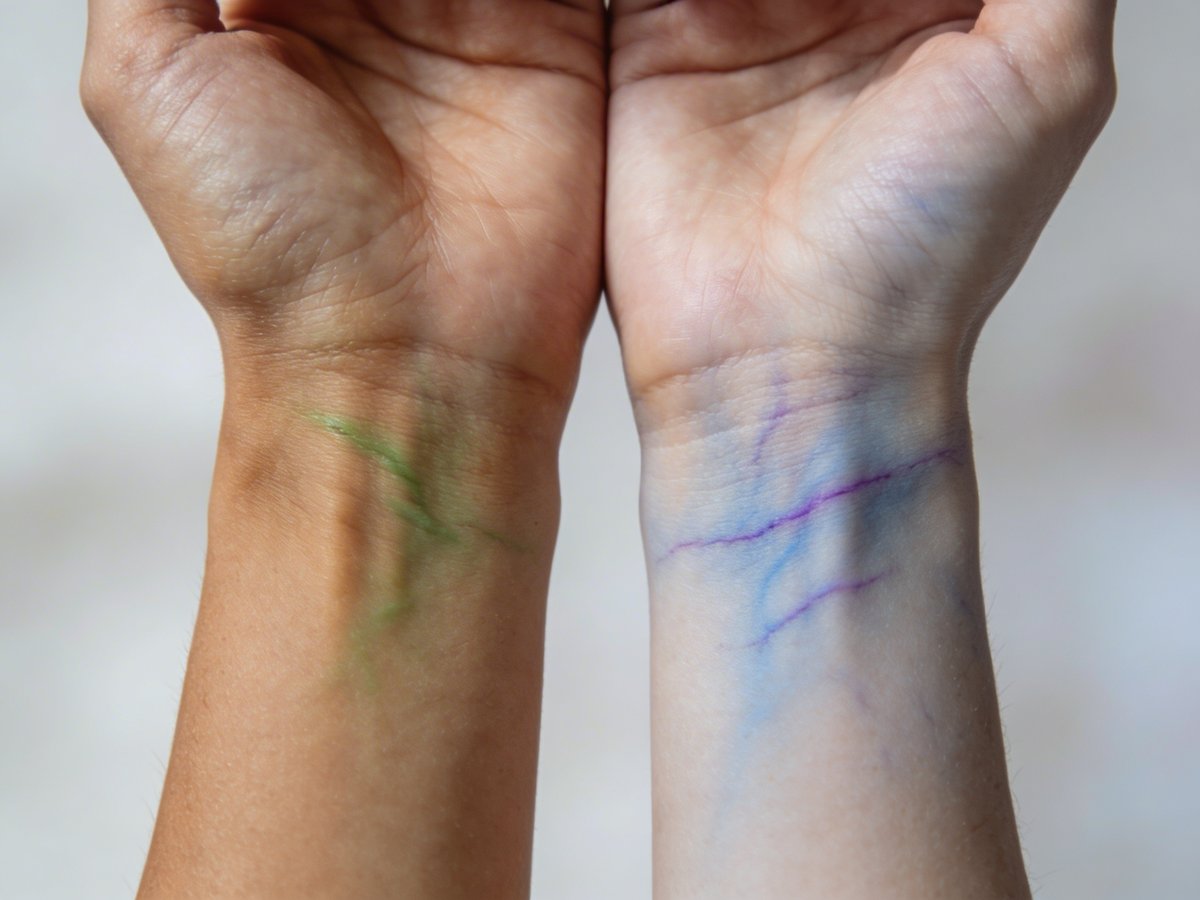
There is a quick trick to identify your undertone. Head to natural daylight and look at your wrists. If your veins appear greenish, your skin has a warm undertone (you are likely a spring or autumn type). Blue-violet veins indicate a cool undertone (summer or winter). If your veins look blue-green, you have a neutral undertone, which gives you greater flexibility.
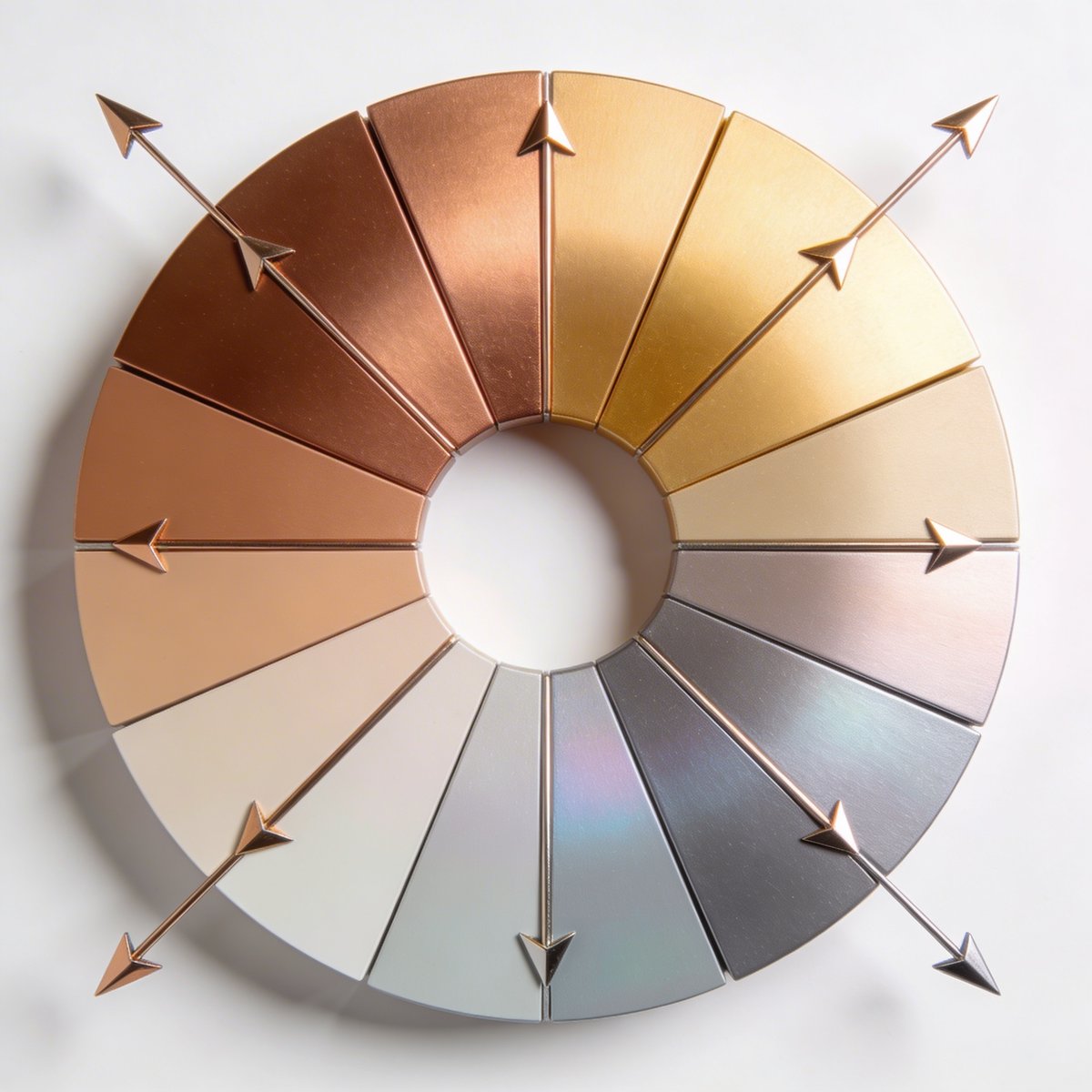
Another test is to hold a piece of gold fabric near your face, then a piece of silver fabric. Which one illuminates your complexion? If it is the gold, you have a warm undertone. If it is the silver, your undertone is cool. You may notice that certain hair colour tones clash with your complexion, just as certain clothing colours do, and choosing the wrong hair shade is far harder to correct than a poor makeup choice.
The 4 seasons in brief
| Season | Undertone | Characteristics |
|---|---|---|
| Spring | Warm | Golden or peachy complexion, light eyes (blue, green, hazel), bright and luminous |
| Summer | Cool | Rose or porcelain complexion, soft eyes (grey-blue, aqua green), delicate |
| Autumn | Warm | Sun-kissed or deep golden complexion, warm eyes (brown, hazel, green), rich and deep |
| Winter | Cool | Vivid rose or very pale complexion, intense eyes (dark brown, deep blue), high contrast |
Some colour analysts also work with tonal colour analysis, which organises the 12 sub-seasons by their dominant quality, deep, light, warm, cool, clear or soft, for greater precision when the classic four-season framework does not fully capture your personal colouring.
If you are uncertain between two seasons, or searching for colour analysis near me, a colour analysis expert can carry out a full draping test with fabric swatches to refine your profile. In the UK, a personal colour analysis consultation typically costs between £95 and £375 depending on the session length (1 to 3.5 hours), whether a physical swatch fan is included, and the consultant's level of experience. For example, Chromology in London offers a 3.5–4 hour in-depth draping session, while Thrive With Colour offers sessions ranging from £50 for an Express to £180 for an Advanced analysis . We understand that some people sit on the boundary between two seasons, which makes self-diagnosis more difficult.
The technical basics of hair colour analysis
To communicate effectively with your colourist and understand the nuances on hair colour packaging, it helps to know a few technical terms from professional hair colour analysis. These will help you translate your personal season into a concrete colour formula.
Tone levels and bleaching bases
The tone level refers to how light or dark a hair colour is, on a scale from 1 (black) to 10 (very light blonde). Your natural tone level determines how easily you will be able to achieve certain colours. Dark hair (levels 1–4) contains a lot of red and orange pigments that appear during lightening, this is known as the bleaching base.
According to the chemistry of hair structure, melanin pigments (eumelanin for brown/black tones and pheomelanin for red/blonde tones) directly influence how hair reacts to colouring. With over 61,000 hair and beauty businesses in the UK (source: PolicyBee / NHBF), you will have no trouble finding a skilled colourist to guide you. Your colourist may sometimes need to neutralise unwanted warm bases before applying the final shade.
Tones and tone modifiers
In professional hair colour naming conventions, the digit after the dot indicates the primary tone modifier. For example, a 7.3 is a blonde (level 7) with a golden tone modifier (.3). Here are the most common modifiers:
- .1, Ash: blue-grey tone, neutralises warm tones (suited to cool seasons)
- .2, Iridescent/Violet: delicate violet tone (cool seasons, particularly summer)
- .3, Golden: warm yellow tone (spring and autumn)
- .4, Copper: warm orange-red tone (primarily autumn)
- .5, Mahogany: red-violet tone (winter for brunettes, autumn for auburn shades)
- .6, Red: pure red tone (high-contrast winter)
Faced with the vast range of hair colours available, this numbering system is your best guide. It allows you to translate your seasonal colour type into a precise formula: a spring woman will favour .3 and .4 modifiers, while a summer woman will gravitate towards .1 and .2.
Spring colour analysis: warm and luminous shades
If you are a spring type, your hair colour palette consists of warm, luminous, and delicate shades. Your golden undertone calls for tones that warm your complexion without weighing it down. Spring colours bring radiance and freshness to your face.
Recommended colours
- Light golden blonde (8.3, 9.3): luminous without being icy, with honey highlights
- Venetian blonde (7.34, 8.34): delicate golden-copper blend
- Caramel (6.3, 7.3): golden warmth for brunette springs, a warm, honeyed shade that flatters golden complexions
- Light golden brown (5.3, 6.3): natural base with a warm glow
- Soft copper (6.4, 7.4): light copper, not too intense
Golden tones (.3) create visual continuity between your peachy complexion and your hair. Avoid ashy tones (.1) or very cold platinum blondes, which would create an unflattering contrast with your golden colouring.
Summer colour analysis: soft and cool tones
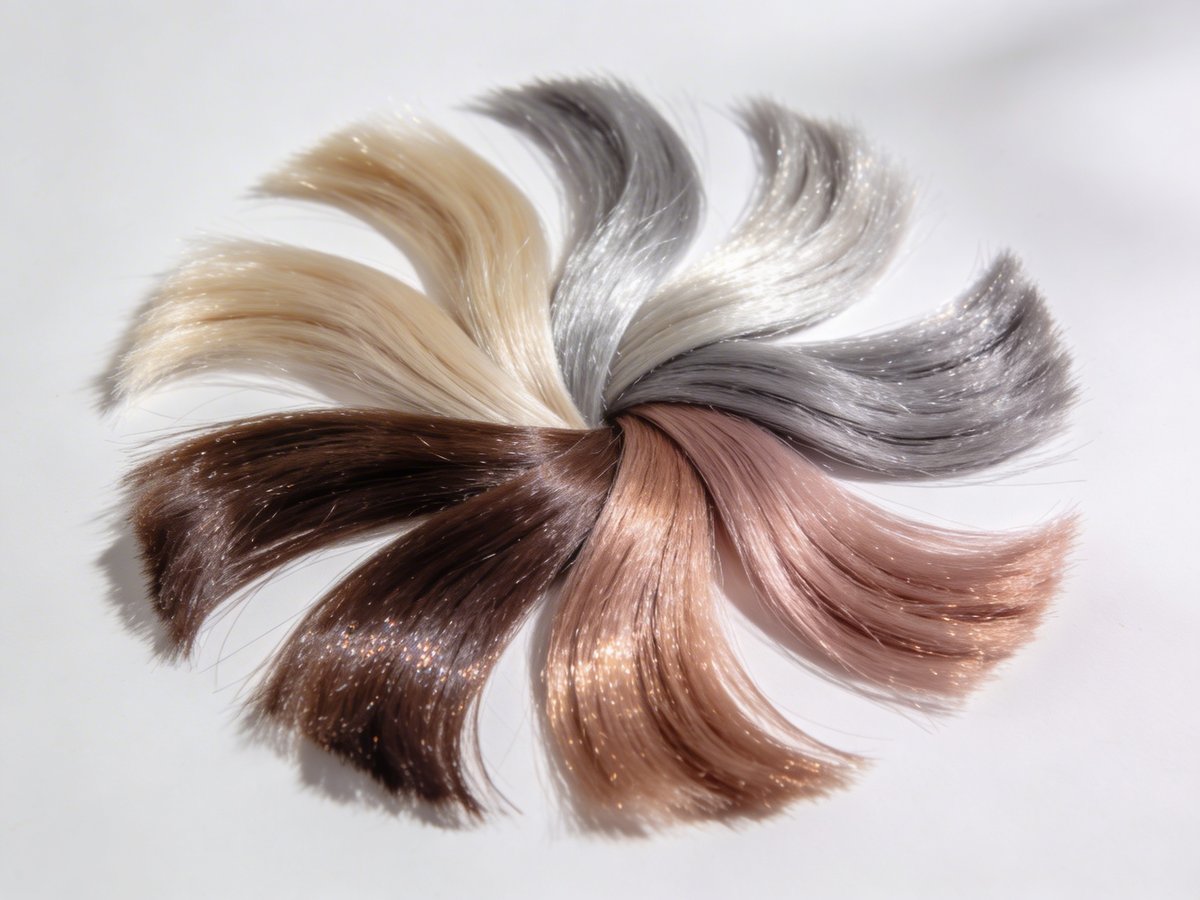
The summer colour analysis type is defined by cool, soft, and delicate shades. Your rose undertone requires ashy or pearlescent colours that respect the natural softness of your complexion. Overly warm or intense colours risk clashing with your delicate skin tone.
Recommended colours
- Ash blonde (8.1, 9.1): fresh blonde with no yellow tones
- Polar blonde (10.1, 10.2): very light with silver tones (if you can carry high tone levels)
- Ash brown (5.1, 6.1): soft brown with grey tones
- Cool brunette (4.1, 5.1): brown without red tones, lightly ashy
- Soft rose gold (9.12, 8.12): a trendy ashy-iridescent blend for summer, a refined pastel shade that adds softness
You may find that very warm golden blondes or intense copper tones do not suit you, this is entirely normal, as these shades create a dissonance with your cool undertone. Always favour .1 (ash) and .2 (iridescent) modifiers, which bring freshness without hardening your features.
If you are specifically a cool summer sub-type (with even more coolness), opt for very light blondes and icy brunettes. Neutral beige tones also work well for this season.
Autumn colour analysis: deep and warm tones
The autumn colour analysis type stands out for its richness and depth. If you are an autumn type, your hair colour palette encompasses the warmest and most intense shades in the spectrum: vibrant reds, chocolatey browns, and deep mahoganies. Your golden undertone supports, and even demands, generous copper and golden tones.
Recommended colours
- Intense copper red (6.4, 6.46, 7.4): the quintessential autumn red, with terracotta undertones that naturally warm the complexion
- Auburn (5.4, 5.46): deep brown-red with copper tones, a rich auburn shade that evokes autumn leaves
- Warm mahogany (4.5, 5.5): rich red-brown, a deep mahogany with warm undertones
- Chocolate brown (4.3, 5.3): warm brown with golden tones, a natural-looking brown shade
- Caramel brown (5.34, 6.34): deep golden-copper blend
- Warm dark blonde (6.3, 7.3): for lower-contrast autumn types
Autumn types are the only ones who can carry intense copper tones (.4) without looking artificial. These shades create a harmonious continuity with your sun-kissed or golden complexion. Avoid ashy tones (.1) at all costs, they will dull your natural radiance and create a grey, unflattering effect.
To discover how to build a complete wardrobe around your autumn colour analysis, see our detailed guide to autumn sub-types.
Winter colour analysis: intense and cool contrasts
The winter colour analysis type is defined by strong contrasts and intense cool shades. If you are a winter type, you can carry the most saturated and dramatic colours: deep black, very dark icy brunette, or conversely, a sharply contrasting platinum blonde. Your cool undertone requires cool or neutral tones.
Recommended colours
- Intense black (1.0, 2.0): a pure black with no red tones, deep and luminous
- Very dark cool brunette (3.0, 3.1): near-black brown with ashy tones
- Platinum blonde (10.0, 10.1): only if you have a very fair complexion to create high contrast
- Mahogany brunette (4.5, 4.56): brown with cool red-violet tones
- Burgundy (4.6, 4.56): a deep red with violet tones, almost bordeaux, a striking, intense colour
- Midnight blue (fashion/creative colouring): for the bold winter types who dare
Winter types can carry extreme colours that other seasons cannot. An intense black or platinum blonde creates a striking contrast that flatters your complexion. In contrast, mid-range shades (mid-browns, mid-blondes) or warm tones (.3, .4) tend to flatten your features and dull your natural radiance.
You may be wondering: "Can you have naturally black hair and be a summer colour type?" Technically yes, but naturally very dark hair contains warm pigments that, once lightened, reveal orange bases that are difficult to neutralise in order to achieve the soft ashy tones of summer. A professional will need to work in several stages to achieve a harmonious result.
Colour analysis and grey hair: adapting your palette
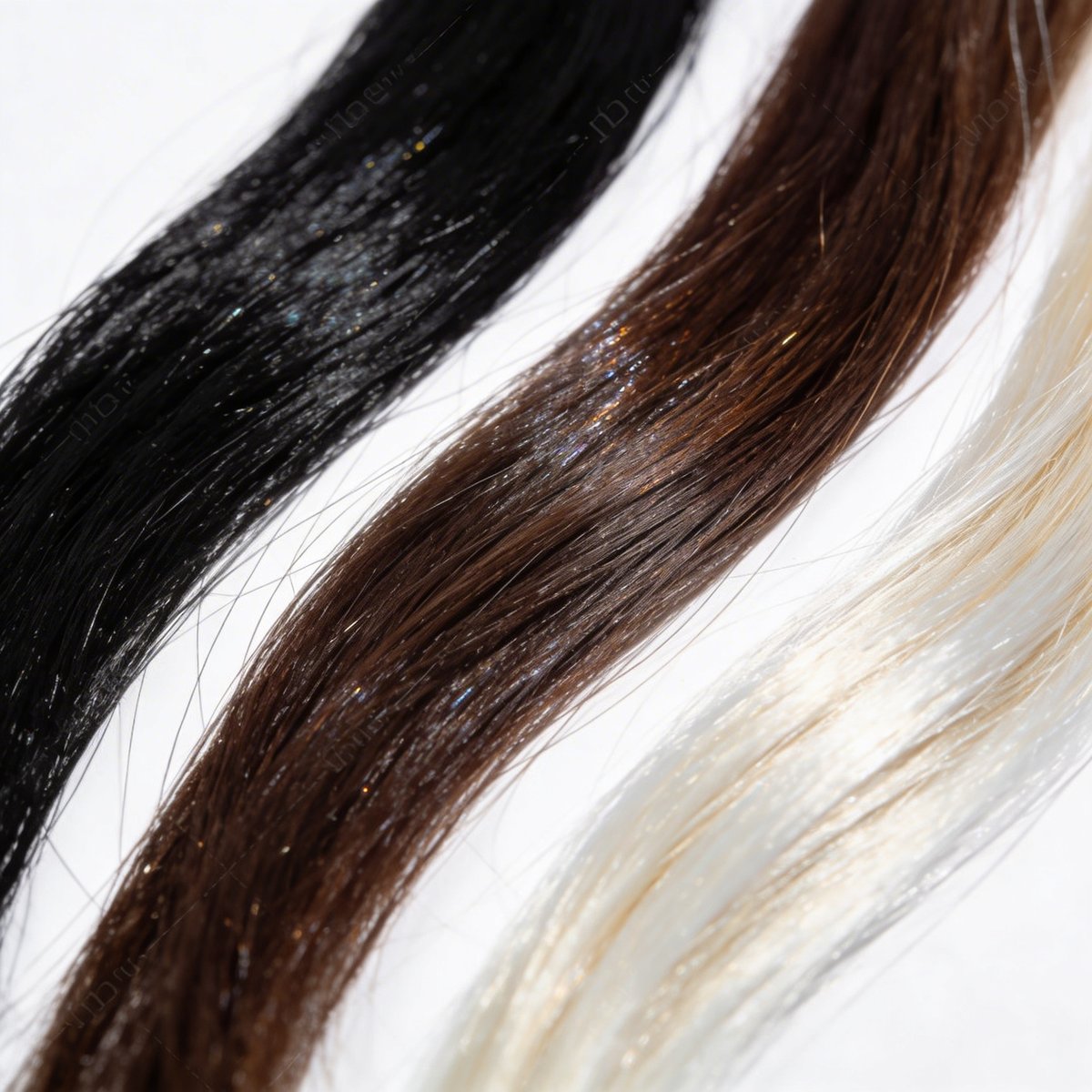
The appearance of grey hair gradually changes your personal colour profile. White or grey hair has no warm pigments, it automatically cools your overall palette, even if your skin undertone remains the same. This means your wardrobe and makeup should evolve towards cooler shades.
Shifting towards the cool seasons
As grey hair comes in, you will gradually move towards the cool seasons:
- A spring type with grey hair shifts towards the summer palette
- An autumn type with grey hair shifts towards the winter palette
This transition is entirely natural and explains why certain clothing colours that suited you perfectly at 30 may no longer work for you at 60. Silver grey hair creates a freshness that calls for complementary cool colours.
Recommended colours to complement grey hair
If you are embracing your natural grey, and quite right too, favour these clothing colours:
- Pure white and intense black: create an elegant contrast
- Deep violet, rich purple, plum, aubergine: perfect complements for silver hair
- Midnight blue, electric blue, emerald green: bring radiance
- Raspberry pink, bright rose, fuchsia: energise the complexion
- Charcoal grey: creates a sophisticated tonal harmony
Colours to avoid: beige, tan, khaki (which dull the complexion), neons (which create a jarring contrast), and an all-grey outfit (which looks monotone). Taupe and khaki can also drain the colour from grey hair.
Colouring grey hair: which shade to choose?
If you wish to colour your grey hair, bear in mind that grey hair absorbs pigments differently (it is more porous). Ashy tones (.1) and iridescent tones (.2) take particularly well on white hair. For a natural result, choose a tone level close to your original colour and add tones suited to your newly cooled colour profile.
Some salons offer blending techniques that harmoniously mix grey and colour, creating a very natural effect. A colour analysis professional can guide you through this transition and adapt the formula to your undertone.
Common mistakes to avoid
Even when you know your seasonal colour type, certain mistakes can undermine the final result of your hair colouring. Here are the most frequent pitfalls and how to avoid them.
Mistake #1: Trusting marketing names alone
Commercial names like "Cherry Cola", "Mushroom Blonde" or "Caramel Macchiato" are appealing but tell you little about the actual colour temperature. Do not rely solely on these names, always check the technical numbering (tone level + modifier) to be certain the shade matches your colour analysis.
Mistake #2: Ignoring your hair history
Your hair has a "memory" of previous colour treatments. If you have accumulated warm tones over the years, achieving a perfect ash result in a single application will be difficult. Conversely, heavily bleached hair will have a stubborn yellow base. Your colourist needs to know your full colour history to adapt the formula accordingly.
Mistake #3: Drastically lightening without professional advice
Going from dark brunette (level 3) to light blonde (level 8) requires several bleaching sessions that weaken the hair structure. This transformation cannot be done at home without risking breakage or a disastrous result (orange, brassy yellow, or an unwanted orange tone). For lightening of more than 2–3 levels, always consult a professional.
Mistake #4: Neglecting tone maintenance
Cool tones (.1, .2) tend to fade quickly, revealing unwanted warm bases. If you are a summer or winter type with ashy hair, invest in violet-pigmented shampoos (to neutralise yellow) or blue-pigmented shampoos (to neutralise orange). Warm tones (.3, .4) are more stable but can turn to dull copper, shampoos enriched with golden pigments will revive the shine.
Mistake #5: Forcing an incompatible trending colour
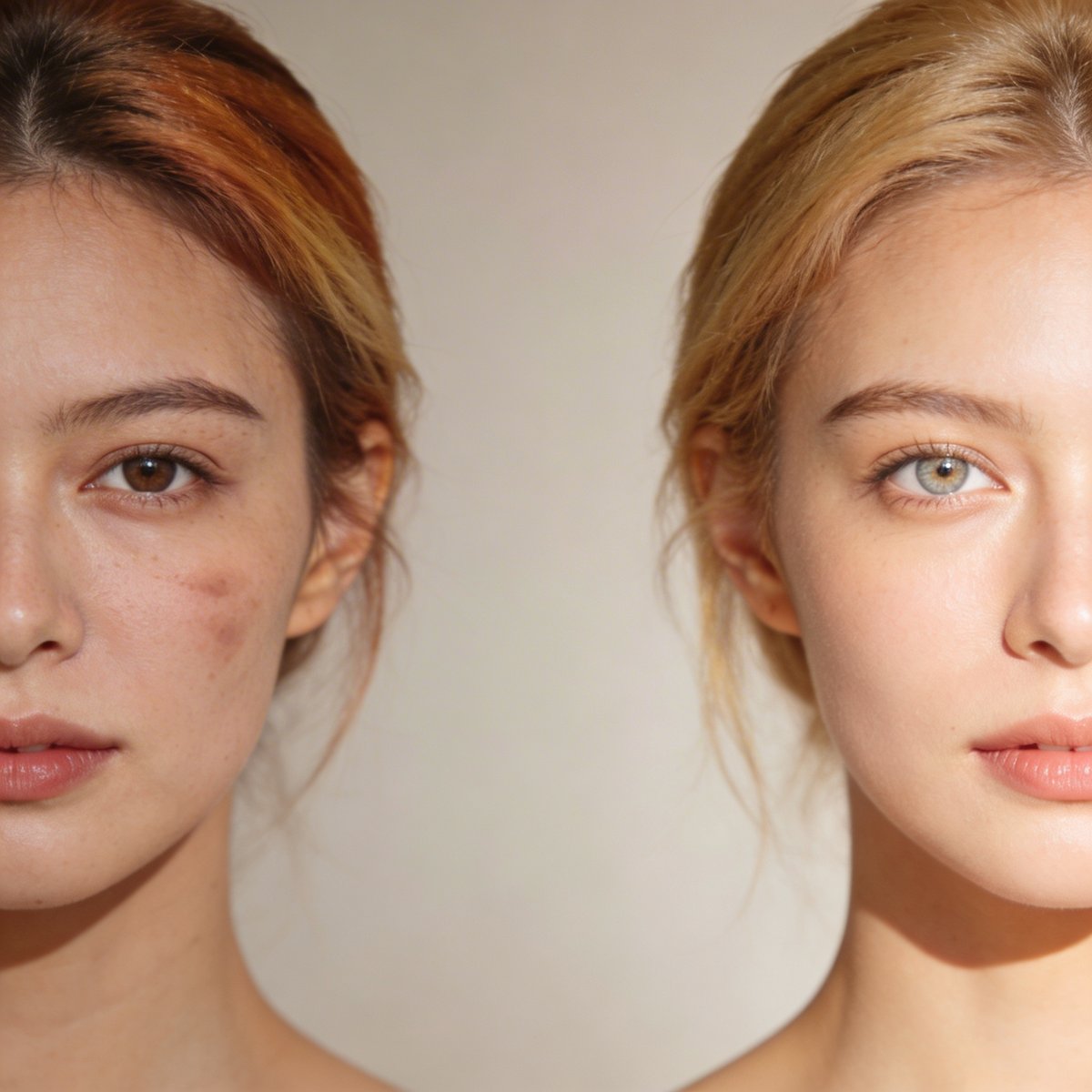
The best way to choose your hair colour goes further than looking at a photo of your favourite celebrity and copying their look. A trend like "bronde" (brown-blonde) or copper may not flatter every colour type. If a colour looks stunning on a winter-type influencer but you are a spring type, the result is likely to disappoint. Stay true to your personal palette rather than blindly following trends.
For personalised advice and to avoid these mistakes, explore our complete colour analysis FAQ, which answers the most frequently asked questions.
Frequently asked questions
How do I find out my colour analysis for hair?
To find out your hair colour analysis, start by determining your skin undertone (warm or cool) using the vein test or the fabric drape test. Then identify your season (spring, summer, autumn, winter) by analysing your natural eye, hair, and skin colour. A full test with a professional remains the most reliable method, but self-tests already provide good indications. Once you have identified your season, you will know whether to favour warm tones (golden, copper) or cool tones (ash, iridescent).
What hair colour is best for a spring type?
A spring type should favour warm and luminous colours: golden blonde (8.3, 9.3), Venetian blonde (7.34), caramel (6.3), light golden brown (5.3, 6.3) or soft copper (6.4, 7.4). Golden (.3) and light copper (.4) tones naturally enhance the peachy complexion and light eyes characteristic of spring. Avoid ashy tones (.1) and very cold platinum blondes, which would create an unflattering contrast with your golden colouring.
How do I choose between warm and cool hair colour?
First, observe your natural hair: golden or copper highlights point towards a warm orientation, while ashy or muted tones point towards cool. Confirm with the vein test (greenish = warm, blue-violet = cool). Then translate into technical numbering: .3 (golden) and .4 (copper) modifiers are warm, while .1 (ash) and .2 (iridescent) modifiers are cool.
What hair colour works best with grey hair?
Grey hair automatically cools your colour profile. If you are embracing it naturally, shift your wardrobe towards cool colours: violet, bold magenta, midnight blue, raspberry pink, emerald green, black and white. If you wish to colour your grey hair, favour ashy (.1) or iridescent (.2) tones that take particularly well on white hair. Choose a tone level close to your original colour for a natural result. Blending techniques (mixing grey with colour) also create a very harmonious effect. Consult a professional for a successful transition.
Do golden tones suit cool skin tones?
No, golden tones (.3) are generally not suited to cool skin tones (summer and winter). These warm tones create a dissonance with the rose or porcelain undertone, giving a dull or yellowish effect that is far from flattering. Cool skin types should favour ashy (.1), iridescent (.2) or cool mahogany (.5) tones that respect their natural temperature. Some people with mixed characteristics may be able to tolerate neutral tones, in such cases, a professional can refine your analysis.
Can you have naturally black hair and be a summer colour type?
Yes, but it is uncommon. The summer colour type is characterised by soft contrasts and delicate shades, naturally very dark hair (black, deep brunette) generally creates a contrast that is too strong for this season. However, some women of Mediterranean or Asian heritage may have a cool undertone despite black hair, placing them in the dark summer category. If you wish to lighten black hair to achieve the ashy tones of summer, bear in mind that this requires several professional bleaching sessions to neutralise the warm orange bases and reach the desired grey-beige tones.
Bear in mind that colour analysis is a guide, not an absolute rule. Some people sit between two seasons, while others have mixed characteristics that allow for greater flexibility. What matters most is choosing a hair colour that makes you feel your best and creates a natural harmony with your complexion.
Conclusion: find your ideal colour by working with your colour analysis
Choosing the right hair colour according to your colour analysis truly transforms your appearance, not dramatically or artificially, but by creating a natural harmony that flatters your complexion, illuminates your eyes, and enhances your features. Unlike eye shadow colours, which can be changed easily, applying the wrong hair colour is much harder to correct. This is why understanding your season (spring, summer, autumn, winter) and your undertone (warm or cool) is essential before taking the plunge.
We have explained how to identify your colour analysis, decode technical tone modifiers (.1, .2, .3, .4…) and select the shades suited to each season. You now know that spring and autumn types favour warm tones (golden, copper), while summer and winter types turn to cool tones (ash, iridescent). You also understand that grey hair gradually shifts your palette towards cooler tones.
If you are still hesitating between two shades, if your hair colour history is complex, or if you are considering a dramatic change, consult a colour analysis professional. Whether you are in London, Manchester, Birmingham, Norwich, Southampton, York, Exeter, Edinburgh, Glasgow or Bristol, an expert can refine your analysis, account for your specific characteristics (grey hair, previous colour build-up, hair condition) and propose a bespoke formula that respects your season whilst meeting your creative ambitions. Many personal stylists in these cities now incorporate colour analysis as part of their full styling service, combining seasonal wardrobe advice with a tailored hair colour recommendation.
The UK hair care market is valued at approximately £2.2 billion (source: Statista), reflecting how seriously people across the country invest in their hair. To help you apply these principles across all aspects of your style, explore our other guides on colour analysis for clothes, hair and makeup. Once you have mastered your personal palette, you can build a unified personal colour palette that spans your hairstyle, wardrobe and makeup, and the difference shows immediately in the mirror.
