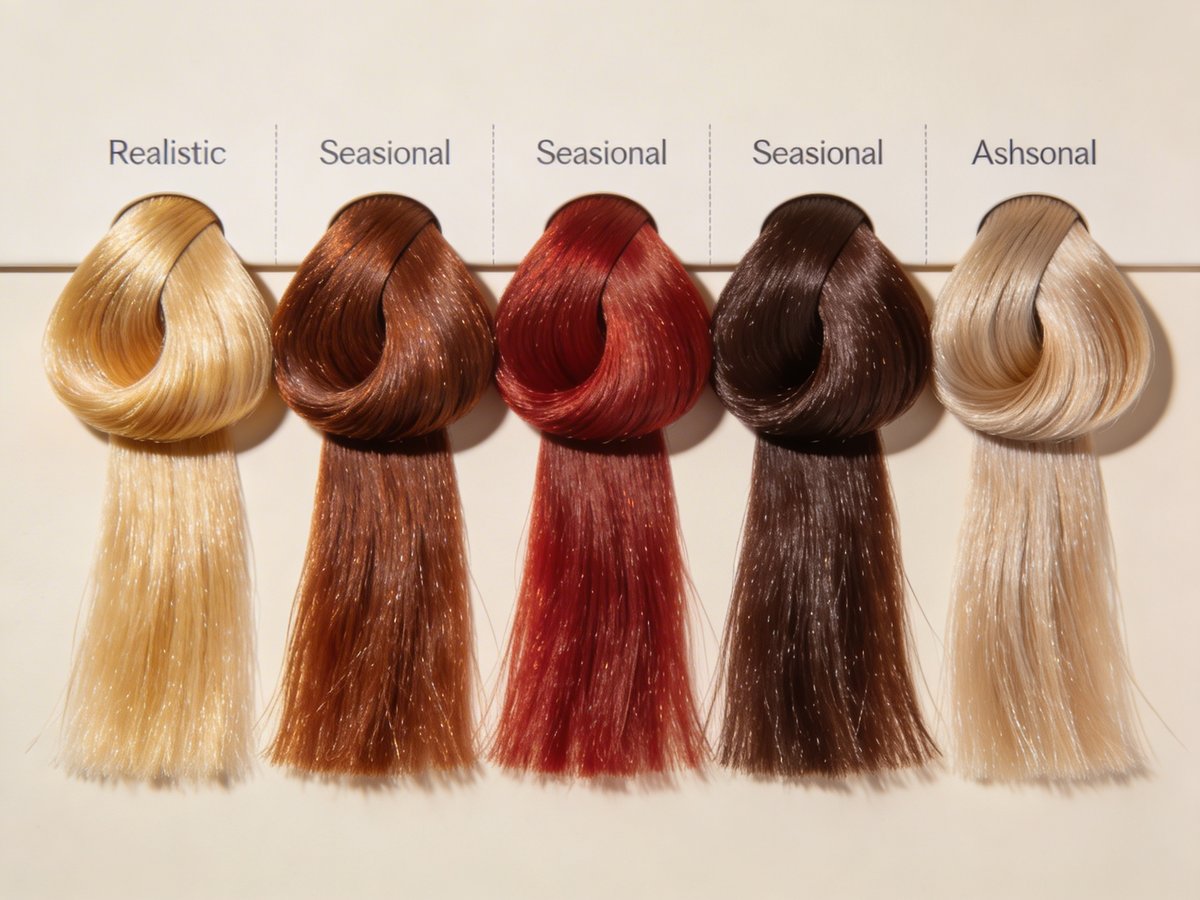
Key takeaways
- Colour analysis analyses your skin tone, eye colour and hair to identify the colours that enhance your appearance.
- The 4 seasons method (Spring, Summer, Autumn, Winter) classifies each person according to their colour temperature (warm or cool), clarity and contrast.
- The 12 sub-seasons method refines this analysis for an even more precise result.
- You can do a colour analysis test at home with the gold/silver jewellery test, the vein test and draping.
- Wearing the right colours gives an immediate healthy glow, simplifies shopping and boosts confidence.
You open your wardrobe, stare at your clothes... and have no idea what to wear. Yet you have dozens of tops. The problem? Some make you look tired, while a simple t-shirt in another shade illuminates your face. This is no coincidence. It's colour analysis!
Colour analysis (known as color analysis in North America) is the art of determining the colours that naturally harmonise with your complexion, your eye colour and the colour of your hair. The result: an instant healthy glow without effort, boosted confidence and a wardrobe that finally makes sense.
In this complete guide, we walk you step by step through discovering your colour season, carrying out your own colour analysis test and putting the results into practice.
What is colour analysis?
Personal colour analysis is a visual and practical method that identifies the colours which create a perfect harmony with your natural appearance.
The principle is simple: each person has unique natural pigments, in their skin, eyes and hair. When you wear colours that match these pigments, your face looks more luminous, your features sharper, your eyes brighter. Conversely, an unsuitable colour can make you look tired, accentuate dark circles or dull your complexion.
A brief history: from Johannes Itten to today
The history of colour analysis goes back to the 1920s. Swiss painter and teacher Johannes Itten, a figure at the Bauhaus, was the first to observe that his students instinctively chose colours that resonated with their own appearance. He laid the foundations of colour theory applied to the individual.
But it was in the 1980s that the method truly became mainstream. Carole Jackson published "Color Me Beautiful", the book that popularised the famous 4 colour seasons with the general public. Since then, the method has continued to evolve, up to the system of 12 sub-seasons used today by professional image consultants.
The 3 dimensions of colour in colour analysis
To understand your profile, colour analysis examines 3 key dimensions:
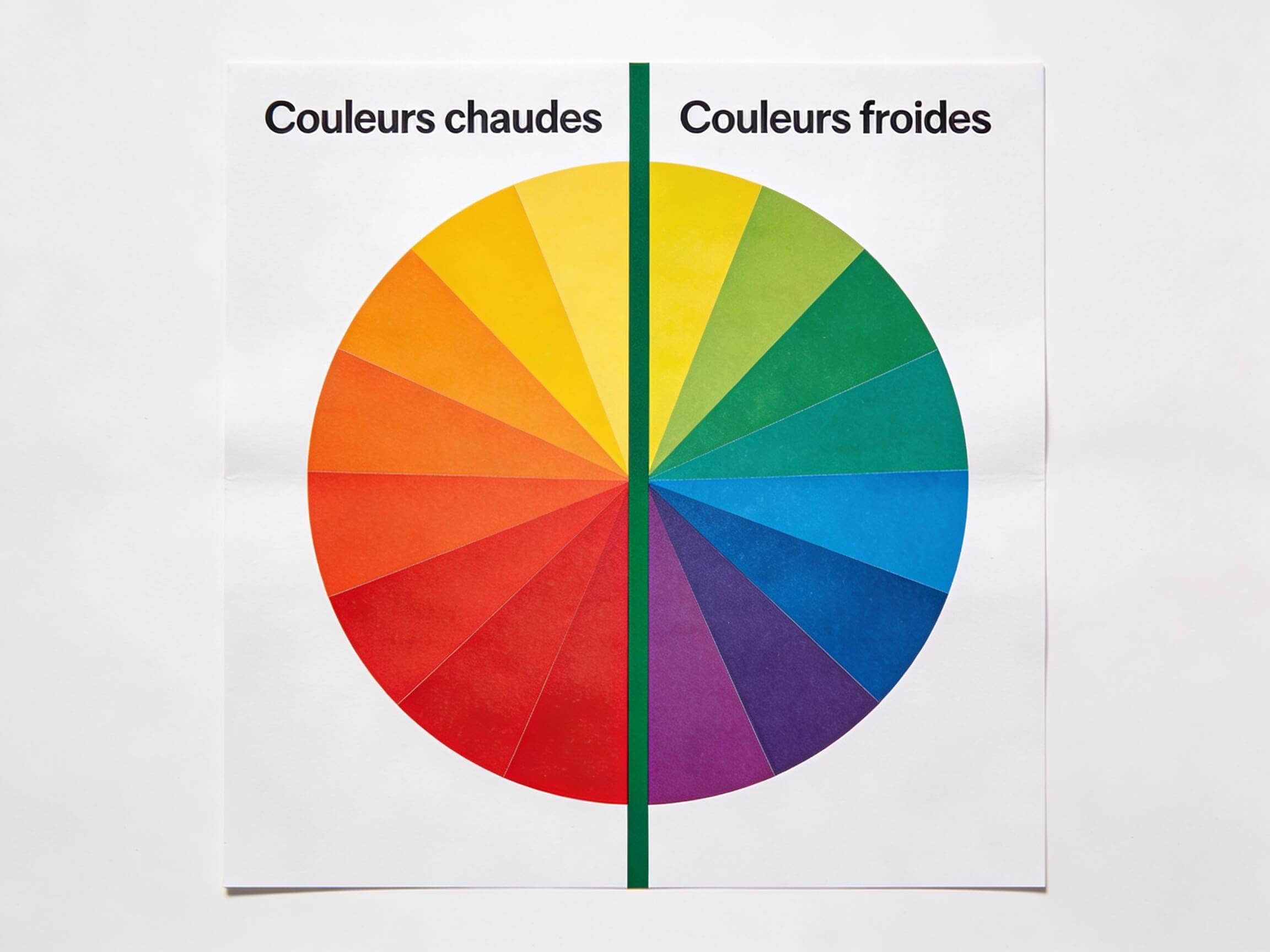
- Temperature: do your natural colours lean towards golden/yellow (warm) or rosy/bluish (cool)?
- Clarity: are you more on the light side (luminous skin, light hair) or dark (matte complexion, dark hair)?
- Saturation: is your appearance soft and muted, or contrasted and vivid?
It is the combination of these 3 criteria that determines your colour season.
Why knowing your colour season changes everything
Is it really worth exploring? The answer is YES, and here's why.
An instant healthy glow
When you wear the colours of your palette, your complexion naturally brightens. Small imperfections fade, your eyes sparkle, and you look rested, even after a short night's sleep. It's almost magical, but science backs it up! The right colours reflect light in a way that flatters your face, without make-up or filters.
Smarter shopping (and savings!)
How many clothes bought on impulse are gathering dust at the back of your wardrobe? With your personal colour palette, you know exactly what to look for in shops. No more impulse buys! You save time, money, and every piece coordinates with the others. Your wardrobe finally becomes coherent.
Boosted confidence
Wearing the right colours means feeling comfortable in your clothes without even thinking about it. No more second-guessing in front of the mirror. You know that terracotta top or that navy blue jumper is made for you, and it shows.
How to do your colour analysis test
Good news: you can carry out your first colour analysis test at home! Here is the method in 3 steps.
Step 1: Prepare correctly
For a reliable result, a few conditions are essential:
- Natural light: position yourself near a window, in daylight (not in the evening under a lamp!)
- Bare face: remove all make-up to let your natural colours come through
- Hair pulled back: tie it back or cover it if you have colour-treated hair, it is your natural colour (or roots) that counts
- White or neutral top: wear a white t-shirt to avoid influencing the test
Step 2: The gold/silver test (warm or cool?)
This is THE basic colour analysis test! Take a gold jewellery piece and a silver one. Hold each near your face in turn and observe:
- Gold illuminates you? Your complexion looks warmer and more luminous? You are probably in the warm colours category (Spring or Autumn).
- Silver flatters you? Your skin looks clearer, your eyes more dazzling? Head towards cool colours (Summer or Winter).
You can complement this test with the vein test: look at your veins on your inner wrist. If they look green, you lean warm. If they are bluish/purple, you are cooler. And if it is a mix of both? You may be neutral, which is not rare!
Step 3: Draping, refining your season
Draping is the method used by professional colour analysts. The principle? Passing different-coloured fabrics under your face and observing the effect on your complexion.
Compare pairs of colours:
- Salmon pink (warm) vs fuchsia pink (cool)
- Turquoise blue (warm) vs navy blue (cool)
- Olive green (warm) vs emerald green (cool)
For each pair, one of the two colours will make your face look more harmonious, fresher, younger. That is the one for you! By accumulating these observations, you will be able to identify your season.
Online colour analysis tests: possibilities and limitations
Several tools allow you to do a free colour analysis test online, analysing your photo with AI to suggest a first orientation. These online tests offer a good, fun and quick starting point. But let's be honest: they do not replace a professional eye. Screens and lighting can skew results. If you want a reliable and definitive analysis, a session with a colour consultant remains the best option, for example with a colour analyst in London or in your region. Expect to pay between £50 and £200 depending on the format (online or in-person).

The 4 colour seasons in detail
In colour analysis, your profile corresponds to one of the 4 seasons: Spring, Summer, Autumn or Winter. Each season groups a coherent family of colours, based on the temperature, clarity and saturation of your natural pigments.
| Season | Temperature | Clarity | Saturation | Ideal jewels | Key colours |
|---|---|---|---|---|---|
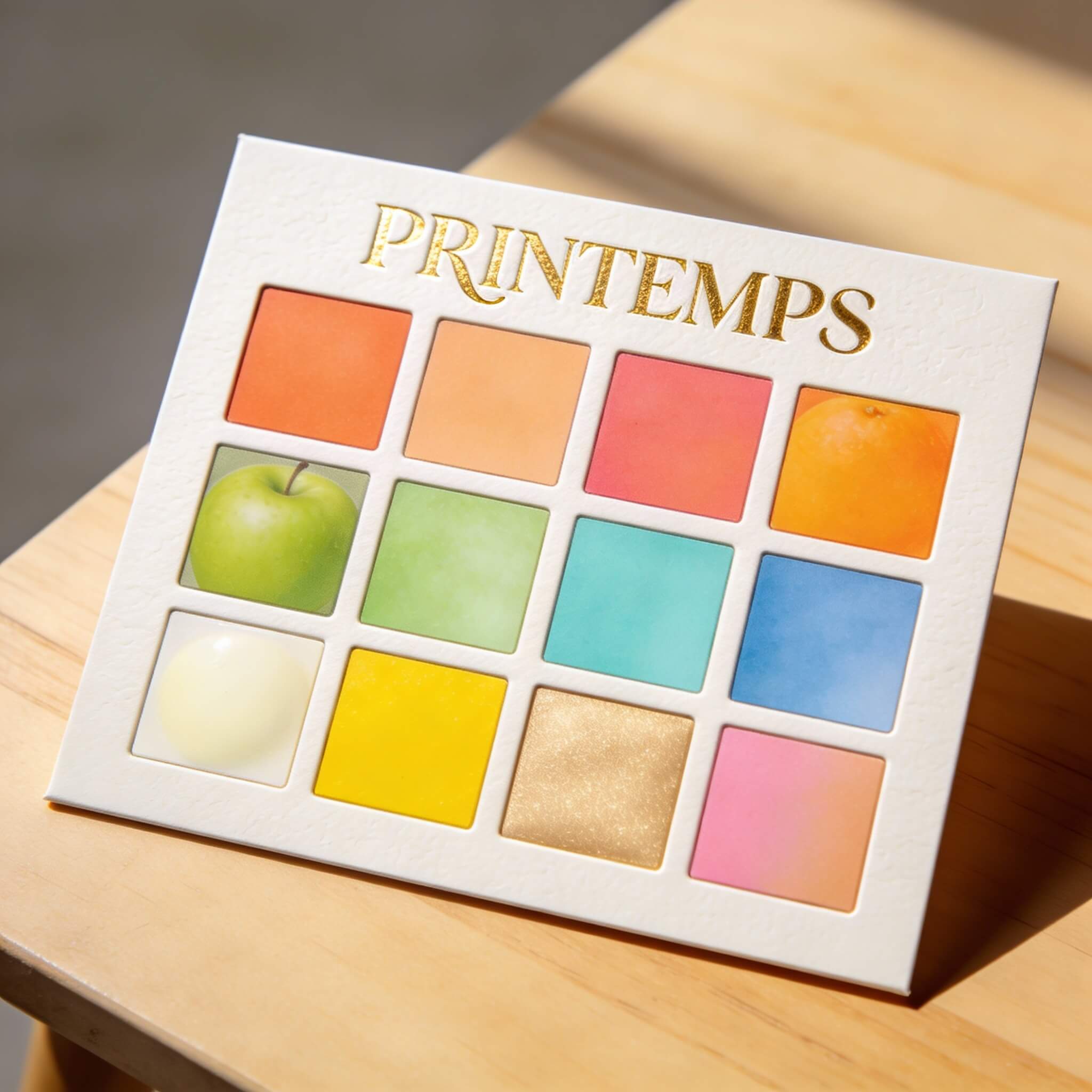
| Spring | Warm | Light | Luminous | Yellow gold | Coral, peach, turquoise, apple green |
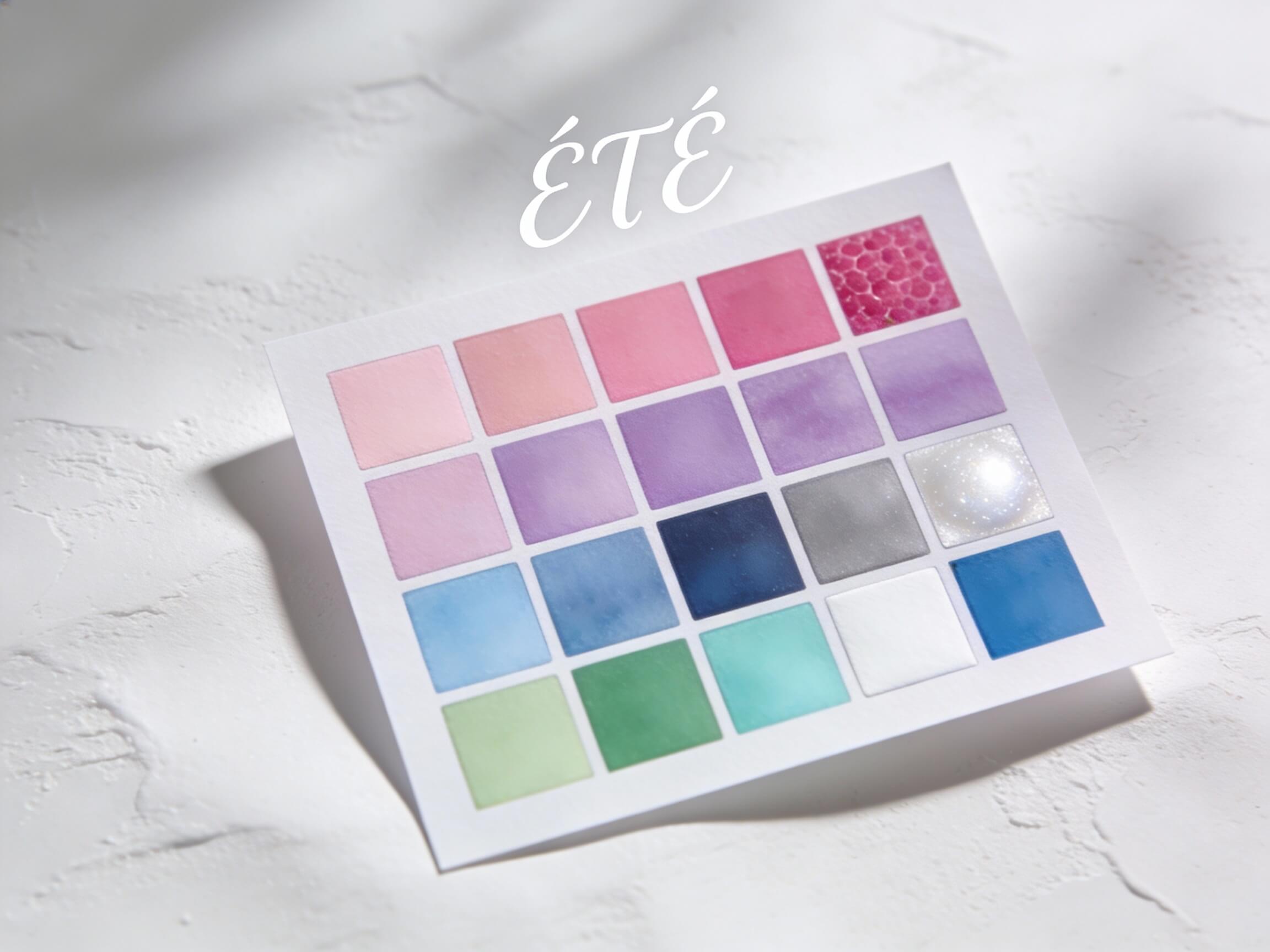
| Summer | Cool | Light | Soft | Silver | Lavender, dusty rose, sky blue, pearl grey |
| Autumn | Warm | Deep | Rich | Yellow gold, brass | Terracotta, khaki, mustard, burgundy |
| Winter | Cool | Deep | Vivid | Silver, white gold | Fuchsia, navy blue, bright red, black |
Spring colour analysis: warm, light, luminous
You are a Spring type if your complexion is light to golden, with peachy or ivory undertones. Your hair is golden blonde, light auburn or chestnut with copper highlights. Your eyes sparkle: vivid blue, green, turquoise or light hazel.
Colours that flatter you:
- Colour analysis guide : Coral, peach, salmon
- Apple green, mint green, turquoise
- Sky blue, periwinkle blue
- Primrose yellow, cream, ivory
- Camel, golden beige
Colours to avoid: Pure black, charcoal grey and colours that are too dark or too cool risk washing you out. Prefer off-white over bright white.
Celebrity references: Nicole Kidman, Scarlett Johansson, Reese Witherspoon.
Summer colour analysis: cool, light, soft
The Summer type has a rather pale, milky or rosy-beige complexion. Their hair is ashy, ash blonde, light chestnut without golden highlights. Their eyes are a soft blue, grey, light green or cool hazel. The overall effect is delicate and powdery, almost pastel.
Colours that flatter you:
- Dusty rose, old rose, soft raspberry
- Lavender, mauve, lilac
- Sky blue, blue-grey, soft navy
- Pearl grey, silvery grey
- Sage green, seafoam green
Colours to avoid: Colours that are too warm (orange, mustard yellow) and too vivid (tomato red, fluorescent green) can overpower the natural softness of your palette. Pure black can also be harsh, prefer navy or charcoal grey.
Celebrity references: Emily Blunt, Marion Cotillard, Kate Middleton.
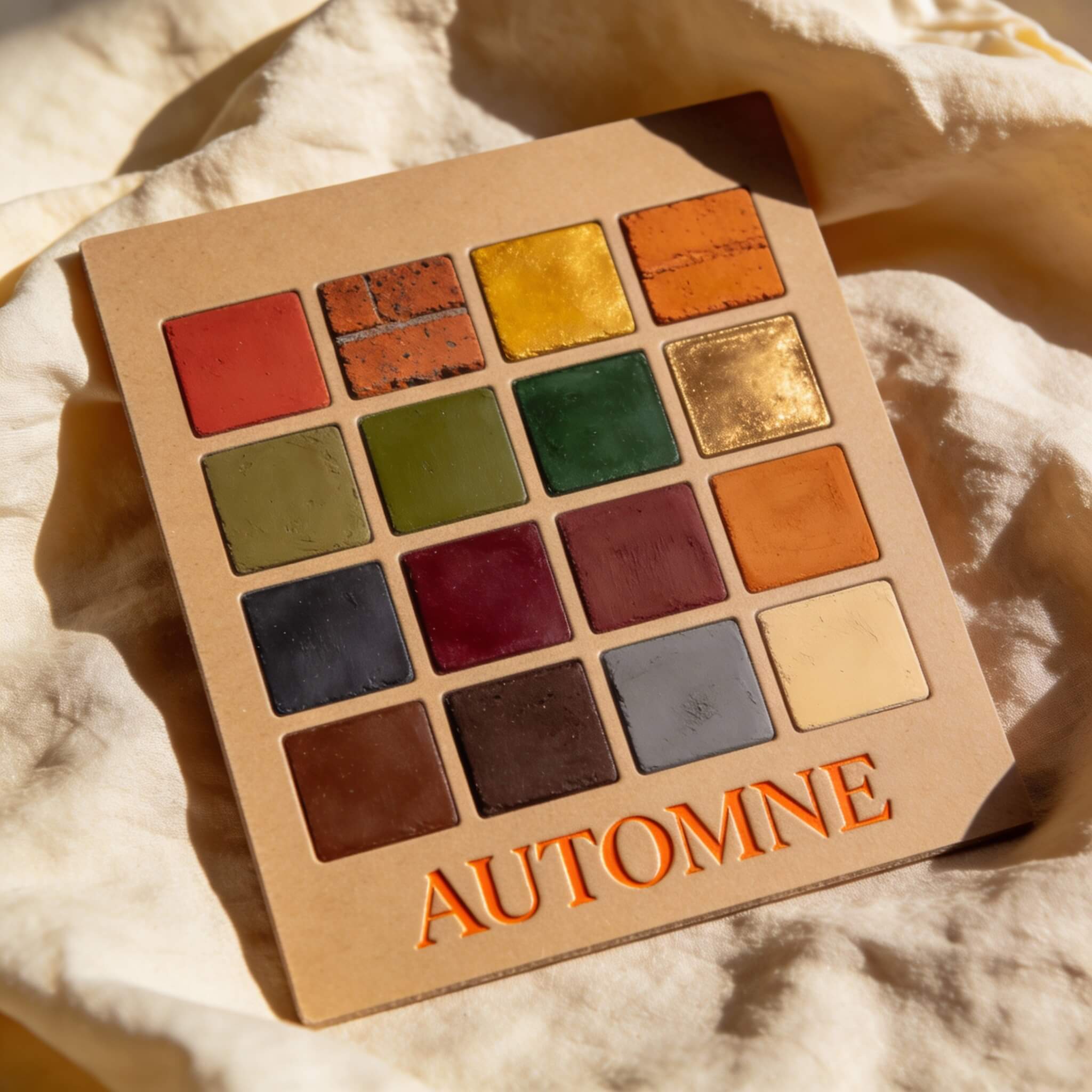
Autumn colour analysis: warm, deep, earthy
Warm complexion with golden or copper undertones, chestnut, brown or auburn hair, green, hazel, amber or warm brown eyes. Autumn types often have freckles and skin that tans to a beautiful golden tone.
This is the season of warm, deep colours evoking autumn leaves, spices and earth. If you love coffee colour, taupe, terracotta or burgundy, there is a good chance this palette is yours!
Colours that flatter you:
- Terracotta, rust, brick
- Mustard, ochre, aged gold
- Khaki, olive green, forest green
- Burgundy, warm plum
- Camel, chocolate, coffee
Celebrity references: Julia Roberts, Jennifer Lopez, Eva Longoria, Beyoncé.
Winter colour analysis: cool, deep, contrasted
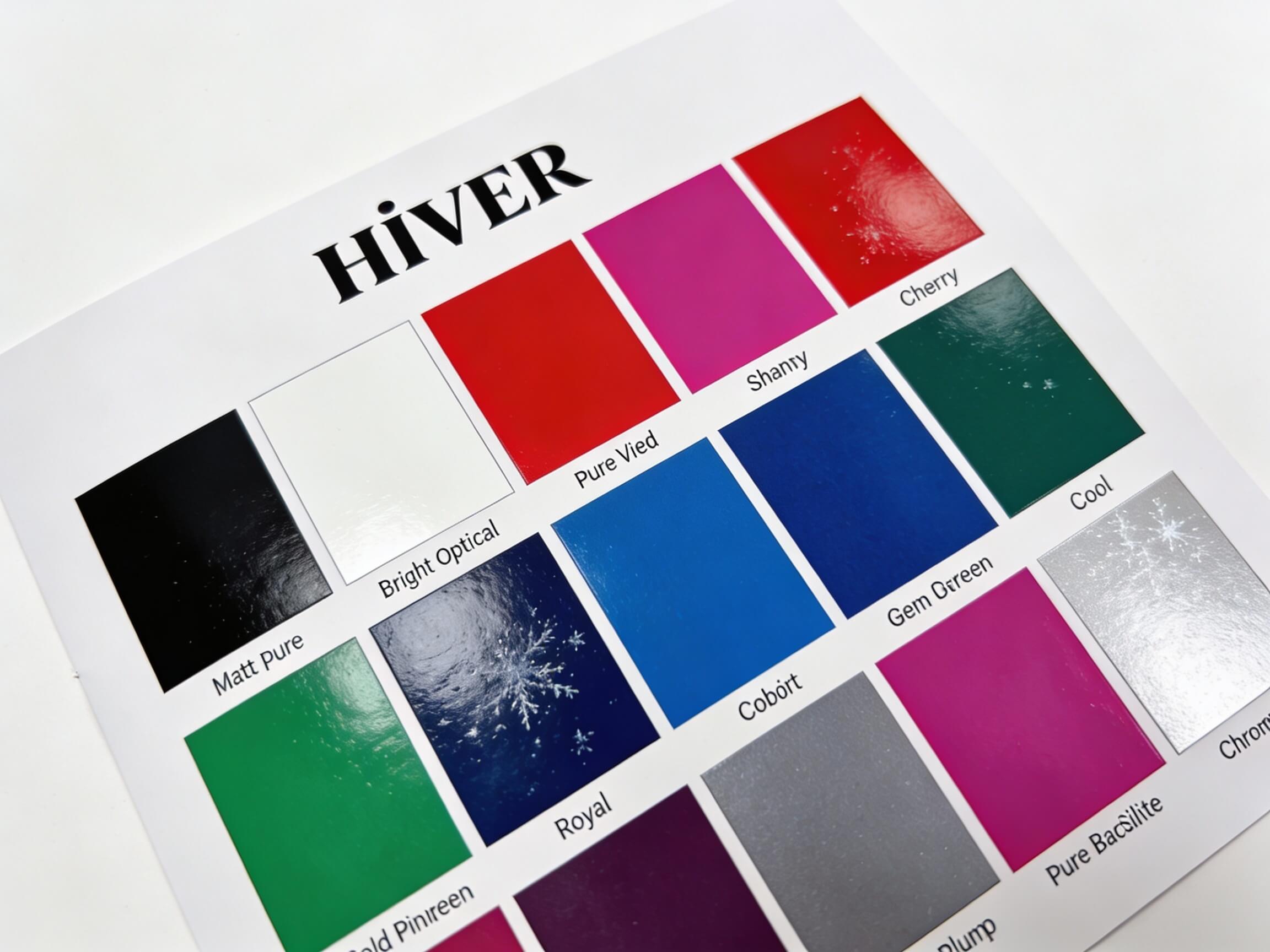
The Winter type is distinguished by a strong contrast between skin and hair. Their complexion is often porcelain, cool olive or matte with pink or blue undertones. Their hair is dark, deep brown, black, or even white/platinum grey. Their eyes are intense: black, deep brown, glacier blue or cool green.
Colours that flatter you:
- Pure black, bright white (contrast is your strength!)
- Vivid red, fuchsia, cherry red
- Navy blue, royal blue, cobalt blue
- Emerald green, forest green
- Deep purple, cool plum
- Charcoal grey
Celebrity references: Penelope Cruz, Halle Berry, Dita Von Teese, Lupita Nyong'o.
The 12 sub-seasons: going even further
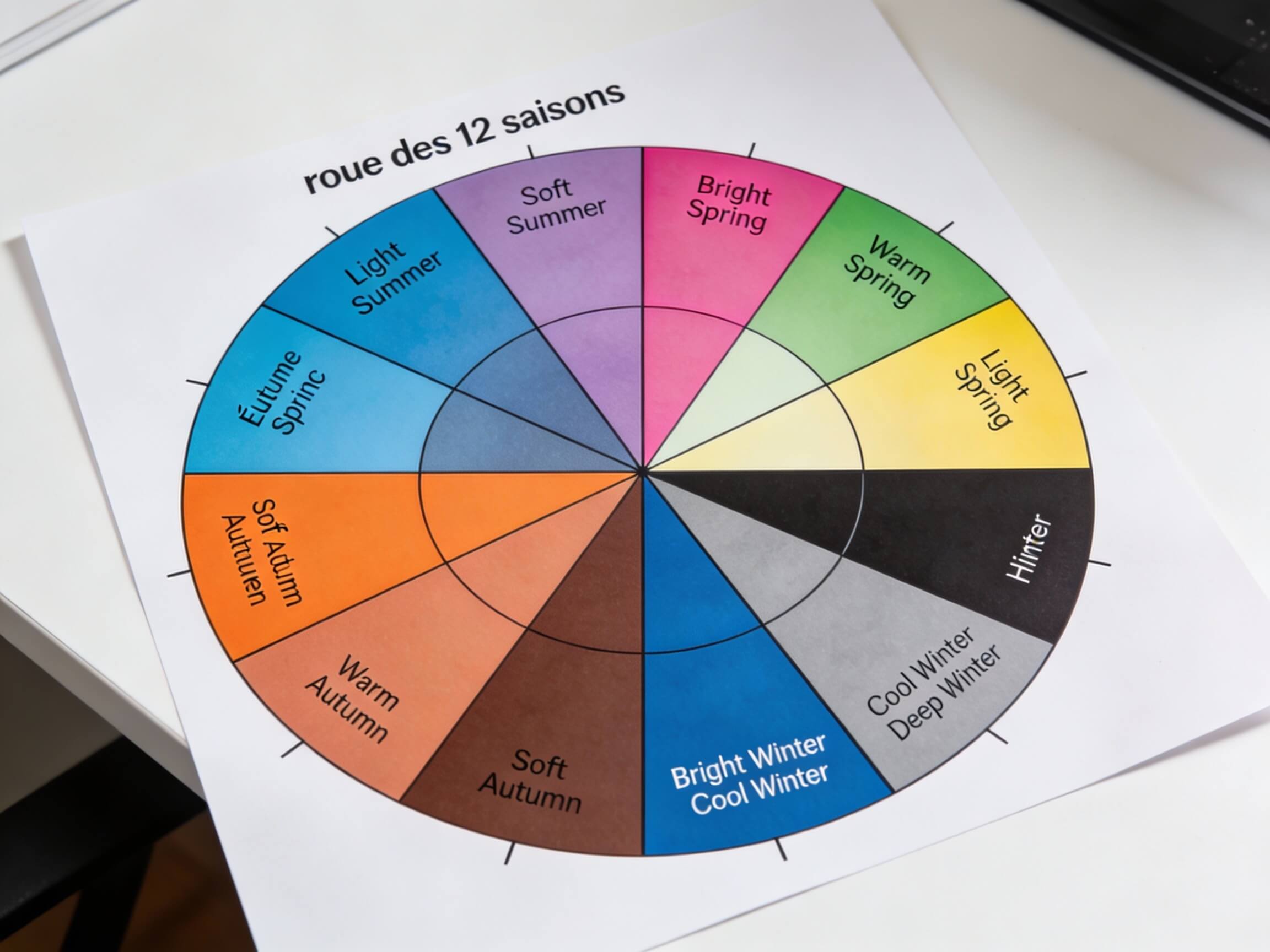
The 4-seasons method is an excellent starting point. But admittedly, classifying all of human diversity into just 4 categories is somewhat limiting! That is why colour analysis experts today work with tonal colour analysis, a refined system of 12 sub-seasons that considerably refines the analysis.
How does it work?
Each season is subdivided into 3 sub-types, according to the most dominant characteristic of your appearance:
| Season | Sub-season 1 | Sub-season 2 | Sub-season 3 |
|---|---|---|---|
| Spring | Light Spring | Warm Spring | Clear Spring |
| Summer | Light Summer | Cool Summer | Soft Summer |
| Autumn | Soft Autumn | Warm Autumn | Deep Autumn |
| Winter | Deep Winter | Cool Winter | Clear Winter |
The sub-season identifies your personal palette of approximately 30 to 56 colours, depending on the system used. For example, a Soft Autumn type will wear warm but muted colours (warm dusty rose, sage green, softened terracotta), while a Deep Autumn will shine in rich, intense tones (burgundy, forest green, chocolate).
How to know your sub-season?
To identify your sub-season among the 12, a self-test can give you a first clue. But the most reliable method remains the professional draping carried out by a colour analyst.
In the UK, colour analysis with a professional (for example a colour consultant in London) lasts approximately 1 to 2 hours and provides you with a personalised swatch of your ideal colours, a tool you will keep for life.
How to apply your palette in everyday life
Knowing your season is good. Applying it every day is better! Here are our practical tips for turning this knowledge into a reflex.
Clothing: the right habits
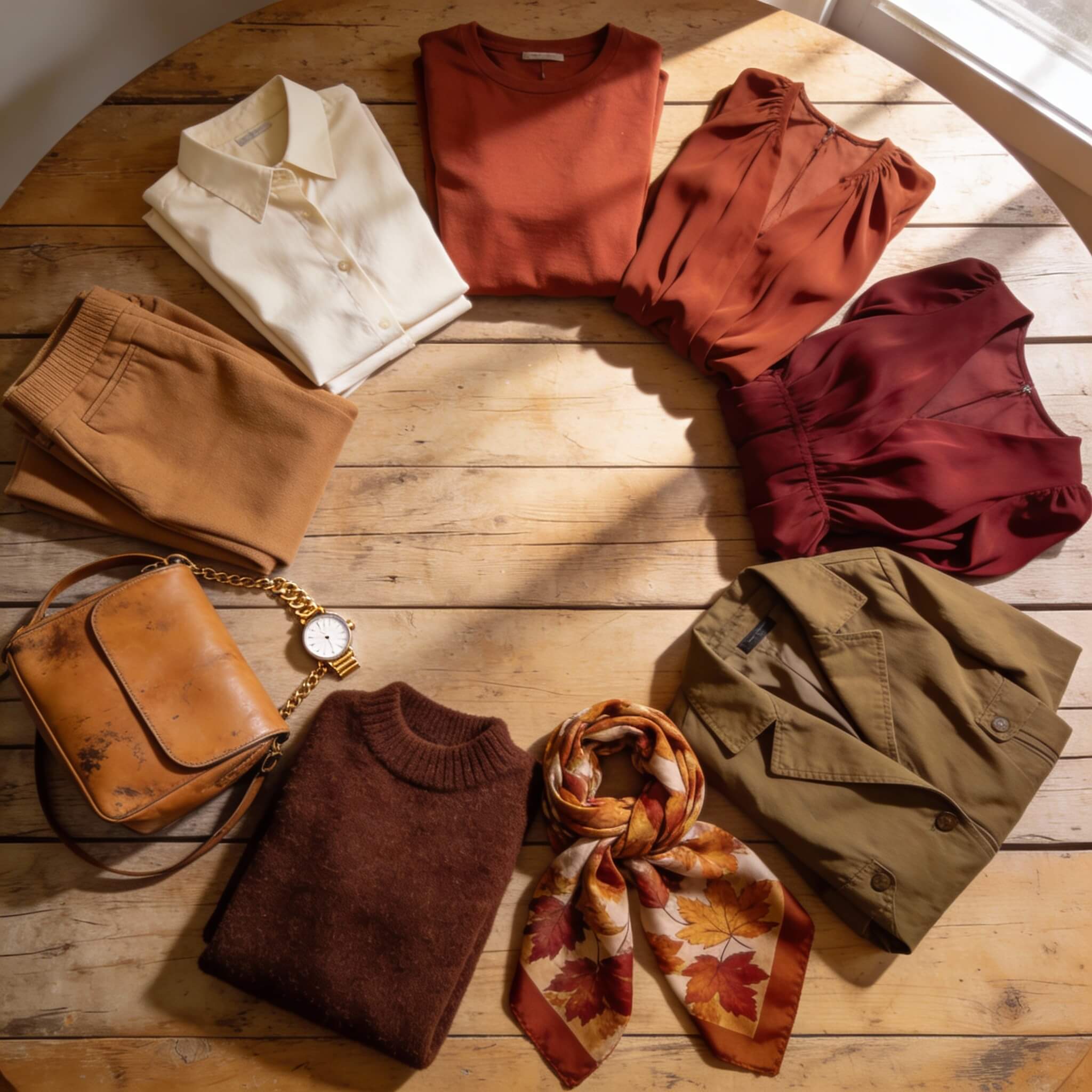
Build your wardrobe around 3 main colours from your palette. They will all harmonise perfectly with each other. Invest primarily in your basics (blouses, jumpers, blazers, coats) in your key colours. Then add trend pieces in your secondary shades.
One golden rule: resist bargains in unsuitable colours! Even at 70% off, a garment in a colour that doesn't work for you remains a bad investment. It will end up at the back of the wardrobe.
Make-up: enhancing your palette
Colour analysis doesn't stop at clothing! As beauty experts at Harper's Bazaar regularly highlight, it also applies to hair colour, make-up and accessories:
- Foundation: choose a warm (golden) or cool (rosy) undertone to match your season
- Lipstick: tomato red for warm types, cherry red for cool types
- Eye shadow: copper/golden tones for Spring-Autumn, rosy/mauve tones for Summer-Winter
- Hair colour: a hair colour too far from your natural season can create a jarring effect. A copper henna will look stunning on an Autumn, but risk clashing on a Summer
FAQ, Your most common questions
How do I find out my colour analysis?
To find out your colour analysis, you need to determine your skin undertone (warm, cool or neutral). The vein test is the simplest method: examine your veins on your wrist in natural light. Bluish or purple veins = cool undertone. Greenish veins = warm undertone. A mix of both = neutral undertone. Your colour analysis also takes into account your eye colour and natural hair colour, which allows you to determine your "season" (Spring, Summer, Autumn or Winter). A professional colour analysis can refine this analysis.
Which colours suit me?
The colours that suit you depend on your skin undertone. To find out, do the vein test or the jewellery test (gold vs silver). Warm undertone: the colours that suit you are earthy and warm shades (amber, golden beige, olive, peach, coral, mustard). Cool undertone: opt for colours with a blue or pink base (emerald, ruby, lavender, cool pink, navy blue). Neutral undertone: you have the advantage of being able to wear both colour families.
What is colour draping?
Colour draping is the main technique used by professional colour analysts. It involves placing fabric swatches in different colours near your face in natural light to observe the effect on your complexion. The colour analyst observes which shades illuminate your skin, brighten your eyes and minimise imperfections. This precise and personalised technique gives much more reliable results than an online test. Find a certified colour analyst near you for a professional draping session.
What is my season in colour analysis?
To determine your season in colour analysis, analyse your skin undertone and your level of contrast. The 4 seasons are: Spring (warm undertone, light and vivid colours), Summer (cool undertone, soft and powdery colours), Autumn (warm undertone, deep and earthy colours), Winter (cool undertone, intense and contrasted colours). Your season is determined by observing the colour of your skin, eyes and natural hair. There are also sub-categories (12 or 16 seasons) for greater precision.
What is a neutral undertone in colour analysis?
In colour analysis, a neutral undertone is a balanced mix of cool and warm undertones. To know if you have a neutral undertone, look at your veins: if they appear both blue and green, that's likely your case. The advantage of a neutral undertone is being able to wear both warm colours (orangey, golden) and cool colours (bluish, rosy). Intermediate shades like taupe, nude pink, sage green or blue-green are particularly flattering.
Conclusion: time to shine!
You now understand: colour analysis is not just a trend. It is a powerful and lasting tool to flatter you like never before, simplify your wardrobe and regain confidence in your choices. Whether you are a luminous Spring, a soft Summer, a warm Autumn or a contrasted Winter, there is a colour palette made exactly for you. The answer to what colour suits me best is simply: the colours your season defines.
Start today with the gold/silver test and home draping. And if you want to go further, don't hesitate to consult one of our colour experts, search for colour analysis near me to find a certified specialist such as a colour consultant in London or a colour analyst in Birmingham, for a complete 12 sub-seasons analysis. Your personalised colour swatch will become your best shopping companion, for life!
For more answers to your questions about colour analysis, visit our complete FAQ page.