Key takeaways
- 3 autumn sub-types: Deep Autumn (high contrast, intense colours), Warm Autumn (dominant golden tones, low contrast), Soft Autumn (low contrast, muted colours)
- Diagnostic criteria: skin temperature (golden/olive), hair-skin-eyes contrast, and intensity of natural colours
- Common palette: warm, earthy and spiced tones (camel, rust, olive, chocolate brown, ochre)
- Colours to avoid: pure black, bright white, cool pastels (bubblegum pink, glacier blue)
- Free test: 5 key questions to identify your sub-type in 3 minutes
Why autumn colour analysis requires in-depth analysis
You have identified your season in colour analysis as "Autumn", but some so-called "autumn" colours tire you while others illuminate your complexion? That is normal. The Autumn season comes in three distinct sub-types (Deep Autumn, Warm Autumn and Soft Autumn), each with its own optimal palette.
Wearing the wrong shades can create as much of a mismatch as wearing another season's colours. A Soft Autumn in Deep Autumn tones will look overwhelmed, while a Deep Autumn in muted tones will appear washed out.
This guide helps you precisely identify your sub-type via objective criteria, then build your personalised palette. For a professional diagnosis, consult our certified colour analysts in the UK.
Contents
Understanding the Autumn season in colour analysis
The 3 dimensions of autumn colours
- Hue: All autumn colours have a warm base (golden, orange or yellow undertones). "Cool autumn" does not exist in standardised colour analysis.
- Value: Lightness or darkness of the colour. Deep Autumn favours dark values, Warm Autumn medium values, Soft Autumn a balanced mix.
- Chroma: Intensity of the colour. Deep Autumn wears saturated colours, Warm Autumn luminous tones, Soft Autumn muted shades.
The 12-season method
The 12-season method, adopted by colour professionals, subdivides each season into 3 sub-types according to their dominant secondary characteristic:
| Season | Primary characteristic | 3 sub-types |
|---|---|---|
| Autumn | Warmth | Deep, Warm, Soft |
Deep Autumn: intensity and contrast
Physical characteristics
Deep Autumn sits between Autumn and Winter. Dominant characteristic: high contrast.
- Skin: Warm undertone (golden, olive, bronze). Tans easily. Olive-green veins.
- Hair: Dark brown, deep chestnut, black with golden/auburn highlights.
- Eyes: Dark brown, deep hazel, intense olive green, dark blue-green.
- Contrast: High between hair and skin.
Celebrity references: Kim Kardashian, Halle Berry, Beyoncé, Courteney Cox.
Colour palette
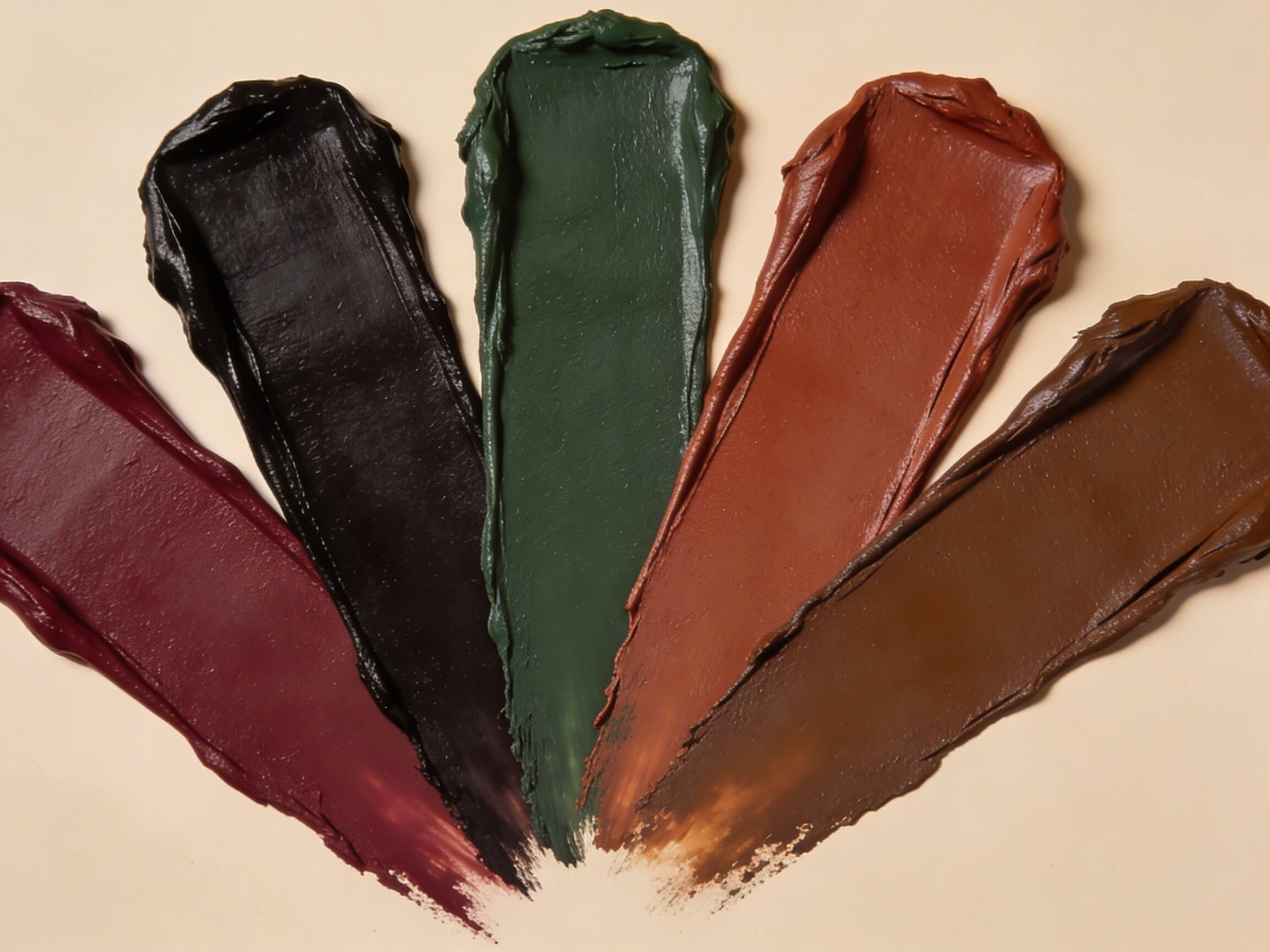
Rich, saturated and deep colours: warm burgundy, black chocolate, forest green, deep ochre, intense copper, petrol blue, dark taupe.
Warm Autumn: the archetypal autumn
Physical characteristics
Warm Autumn embodies maximum golden warmth with low to medium contrast.
- Skin: Golden, peach or copper undertone. Tans easily. Very green veins.
- Hair: Honey blonde, golden chestnut, copper auburn, red. Natural golden/red highlights.
- Eyes: Light hazel, golden green, amber, light blue-green. Golden sparkles.
- Contrast: Low to medium.
Celebrity references: Jessica Chastain, Nicole Kidman, Amy Adams, Julianne Moore.
Colour palette
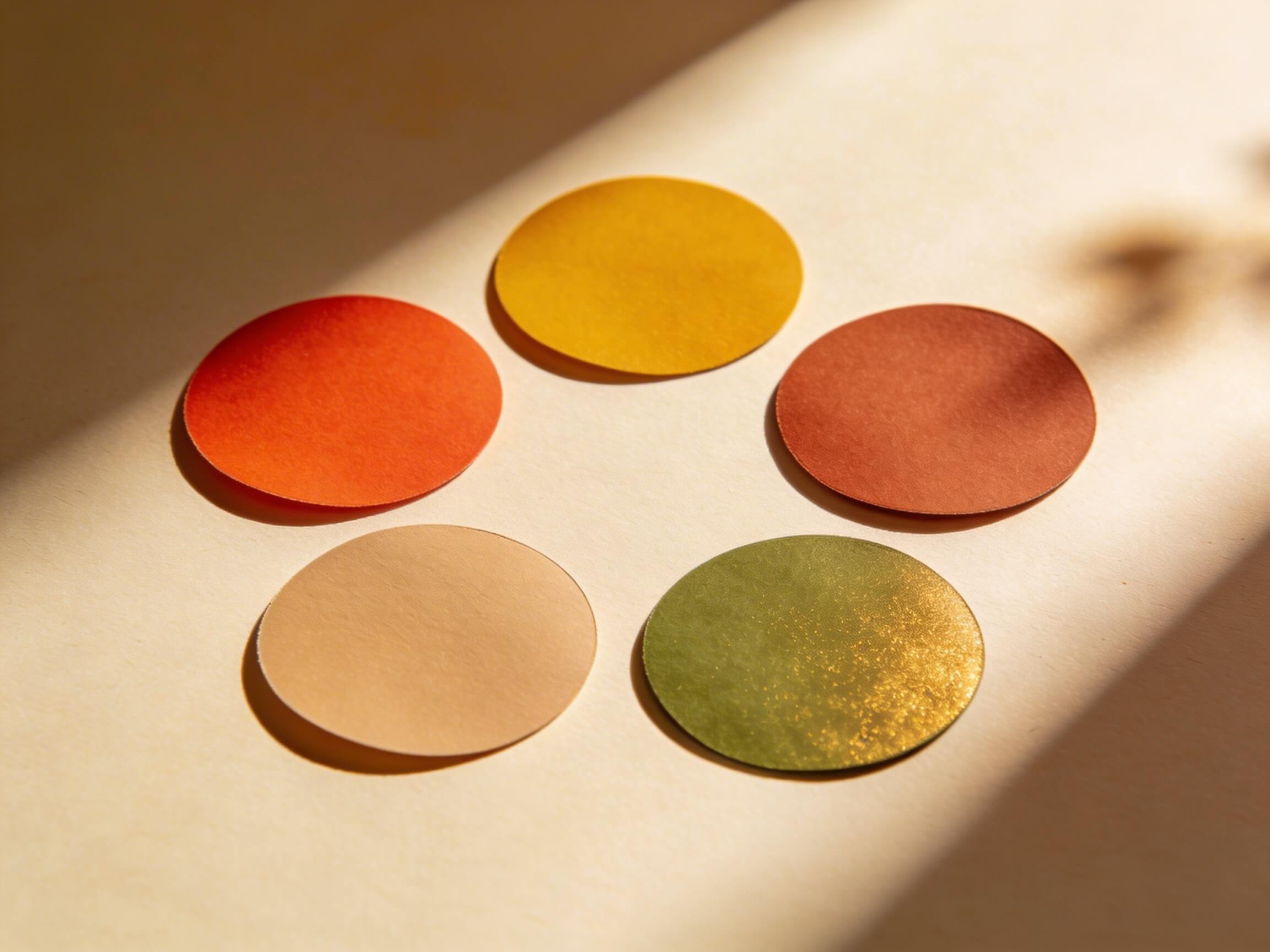
Luminous, golden and warm colours: coral, light rust, terracotta, light camel, moss green, mustard, warm turquoise, ivory.
Soft Autumn: subtlety and harmony
Physical characteristics
Soft Autumn sits between Autumn and Summer. Dominant characteristic: softness, very low contrast.
- Skin: Neutral-warm undertone (beige, light peach). Tans gradually.
- Hair: Light ashy-golden chestnut, warm dark blonde. Often looks slightly dull.
- Eyes: Grey hazel, grey-green, blue-grey with golden touches. Difficult to define.
- Contrast: Very low, homogeneous appearance.
Celebrity references: Drew Barrymore, Gisele Bündchen, Jennifer Aniston.
Colour palette
Muted, softened and subtle colours: soft brick rose, muted terracotta, warm taupe, sage green, soft khaki, soft ochre, muted teal, off-white.
Self-diagnostic test: which autumn type are you?
5-question test
Question 1: Hair-skin contrast?
- A) High: hair noticeably darker than skin
- B) Medium: visible difference but moderate
- C) Low: similar values
Question 2: Eye colour?
- A) Intense and deep (dark brown, intense olive green)
- B) Light and luminous (light hazel, golden green, amber)
- C) Soft and blurred (grey-green, grey hazel)
Question 3: Which colours flatter you?
- A) Rich and saturated (deep burgundy, forest green, chocolate)
- B) Luminous and warm (coral, mustard, camel)
- C) Softened and subtle (taupe, soft khaki, muted brick rose)
Question 4: Pure black or bright white?
- A) Black suits me, white makes me look harsh
- B) Both tire me
- C) Black completely overwhelms me
Question 5: Complexion?
- A) Marked warm undertone (olive, golden, bronze), matte skin
- B) Very warm undertone (pronounced golden, peach, copper)
- C) Discreet neutral-warm undertone, light to medium skin
Results:
- Majority A: Deep Autumn
- Majority B: Warm Autumn
- Majority C: Soft Autumn
If your answers are mixed, test the colours in natural light. Also consult our colour guides or book an appointment with a colour analyst in London or Manchester.
Comparison table of the 3 sub-types
| Criterion | Deep Autumn | Warm Autumn | Soft Autumn |
|---|---|---|---|
| Characteristic | Depth | Warmth | Softness |
| Contrast | High | Low to medium | Very low |
| Intensity | Saturated, rich | Luminous, light | Muted, softened |
| Typical hair | Dark brown, golden black | Honey blonde, auburn, copper | Light chestnut |
| Metals | Gold, bronze, copper | Yellow gold only | Rose gold, matt gold |
| Signature colour | Deep burgundy, forest green | Coral, mustard | Warm taupe, soft khaki |
| Common mistake | Colours too pale | Black or silver | Colours too vivid |
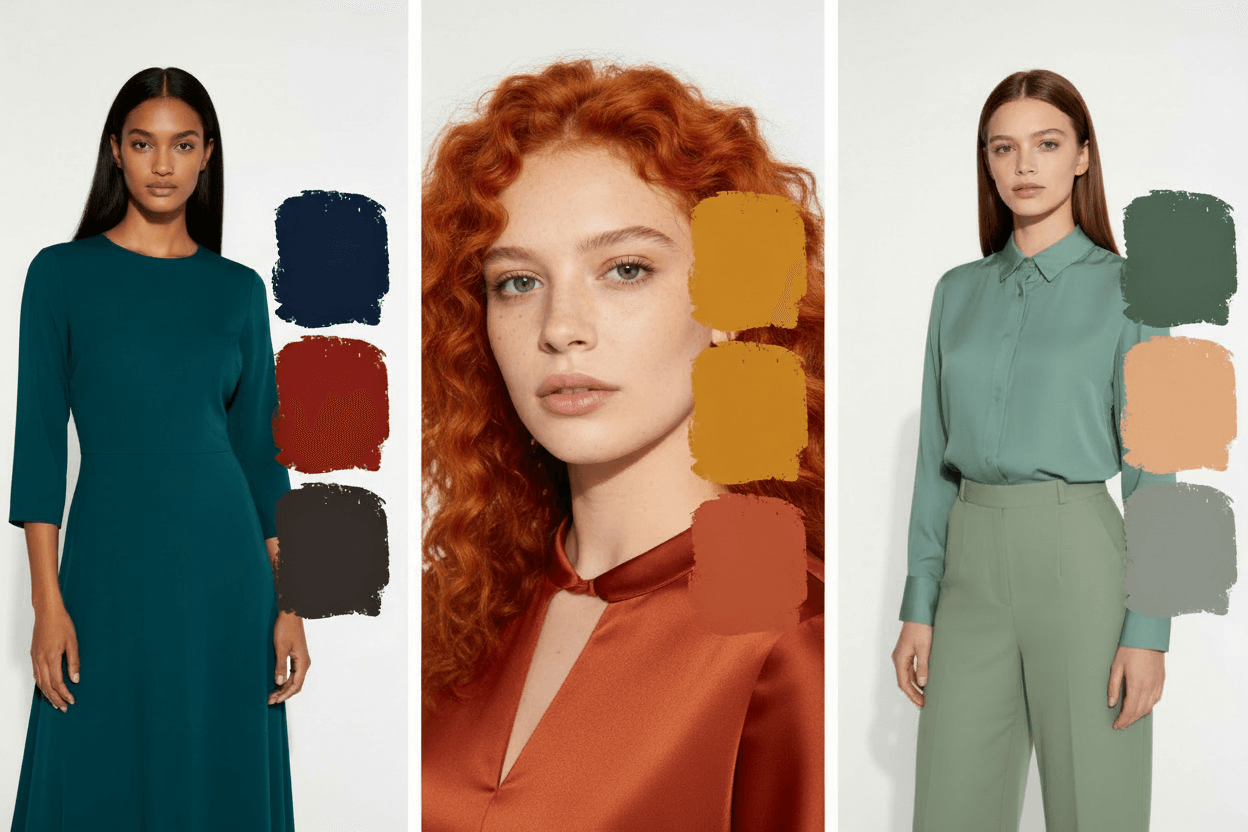
Colours to avoid for all autumn types
- Pure black: Too cool (Deep Autumn can tolerate a warm black)
- Bright white: Prefer ivory, ecru, off-white
- Cool pastels: Bubblegum pink, glacier blue, lilac, lavender
- Pure cool grey: Steel grey, mouse grey, prefer taupe
- Bright silver: Especially Warm Autumn (patinated silver tolerated for Deep/Soft)
- Neons: Fuchsia, fluorescent pink, fluorescent green
- Cool blues: Royal blue, electric blue, periwinkle
Build your personalised colour palette in 4 steps
Step 1: 3 signature colours
Choose 3 colours that illuminate your complexion, match your style and are available in shops.
Step 2: 2 base neutrals
Deep (charcoal + deep ecru), Warm (ivory + camel brown), Soft (ashy beige + pale ecru).
Step 3: Test colours
Test 2-3 colours at the limits of your palette to refine.
Step 4: 12-colour capsule palette
Compile: 3 signatures + 2 neutrals + 2 validated tests + 5 complementary. This becomes your permanent personal colour palette, your shopping guide for life.
For a professional diagnosis with a bespoke swatch, consult our certified colour analysts, for example in London or Birmingham.
FAQ: your questions about autumn colour analysis
How do I know if I am Deep Autumn or Warm Autumn?
The difference is contrast and intensity. Deep: high contrast (dark hair), saturated colours. Warm: low contrast, luminous and golden colours. Dark hair + intense eyes = Deep. Blonde/auburn hair + light eyes = Warm.
What colours to wear as an autumn type?
Warm-based colours always: camel, rust, olive, chocolate, ochre, warm burgundy, forest green. Adapt the intensity: saturated (Deep), luminous (Warm), muted (Soft). Avoid: pure black, bright white, cool pastels, bright silver.
What hair colour for an autumn colour analysis?
Always warm highlights. Deep: copper/auburn on dark base. Warm: honey, warm blonde (never platinum). Soft: soft honey-hazel. Avoid: ashy, platinum, cool tones, bluish black.
Conclusion: reveal your autumn radiance with precision
Identifying your sub-type, Deep, Warm or Soft, transforms your approach to fashion and make-up. This precision allows you to build a coherent wardrobe, save time shopping, and enhance your natural colours.
The 3 golden rules:
- Respect warmth: Always a warm base (golden, orange, earthy)
- Adapt intensity: Saturated (Deep), luminous (Warm), muted (Soft)
- Choose gold: Yellow gold, bronze, copper, avoid bright silver
Integrate 2-3 signature colours, test in natural light, observe the difference. A tonal colour analysis session with a professional, using draping to identify whether you are Deep, Warm or Soft, will give the most precise result. Search for colour analysis near me to find a certified consultant, or explore our colour analysts directory.
For more answers to your questions about colour analysis, visit our complete FAQ page.