Key Takeaways
- Beginner draping kits typically include 5–12 drapes (£85–£130), while professional sets contain 18–30 drapes (£170–£350)
- Duchess satin is the professional standard; premium polyester with a satin finish offers a practical and cost-effective alternative
- Standard professional drape size is 50x70 cm; 60x36 cm compact drapes suit personal use
- Your kit choice should match your method (4, 8, or 12 seasons) and intended use (personal, friends, or paying clients)
- A white headband and a personalised colour fan are essential accessories for accurate analysis
Stepping into the world of colour analysis, one of the first decisions you'll face is: which draping kit should I buy? The UK market offers everything from a basic set of drapes at £20 to professional kits exceeding £300, and the differences are far more significant than price alone. The fabric quality, number of drapes, included accessories, and compatibility with your working method all directly affect how accurate your analyses can be. This guide walks you through everything you need to know to choose the right colour analysis kit for your level and goals.
What's inside a professional colour analysis kit
A colour analysis draping kit is more than just a bundle of coloured fabric. Understanding each component helps you identify what truly matters for accurate seasonal analysis.
The drapes: the heart of the kit
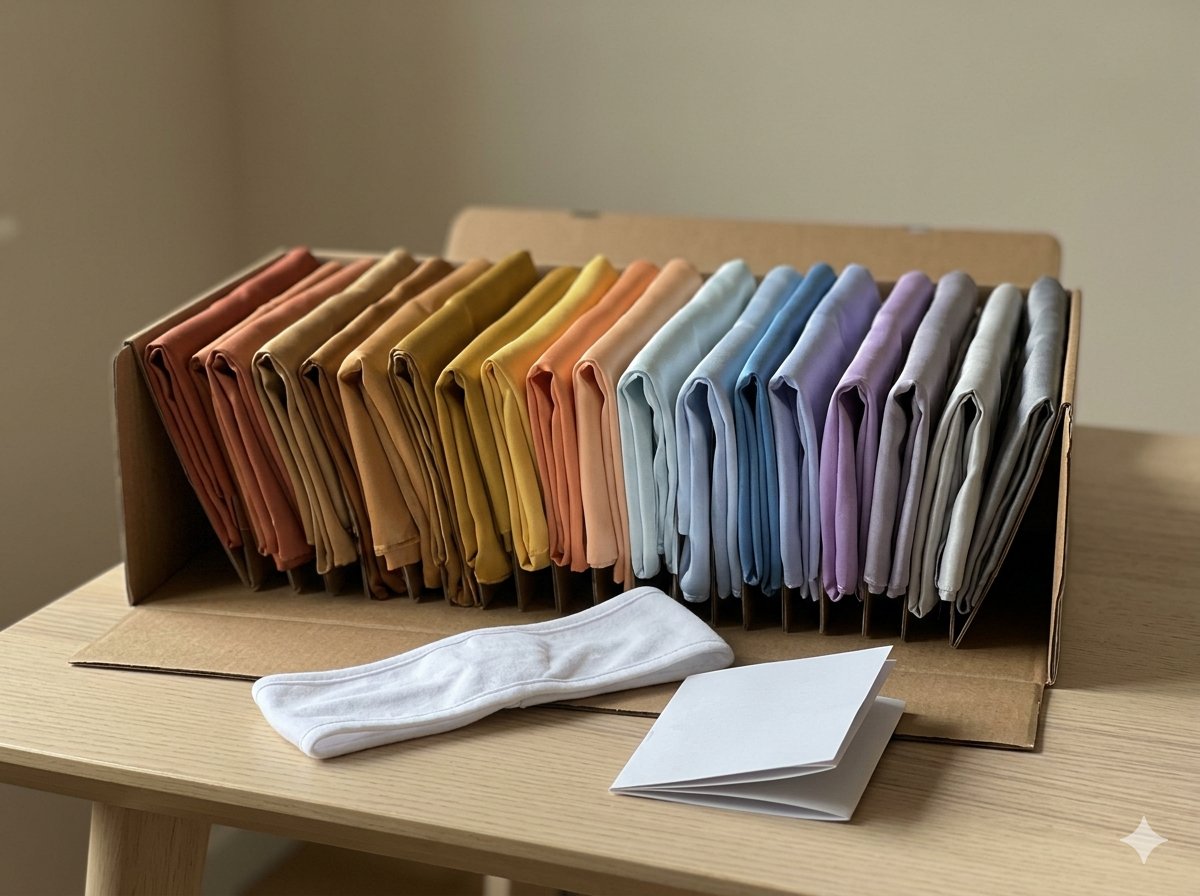
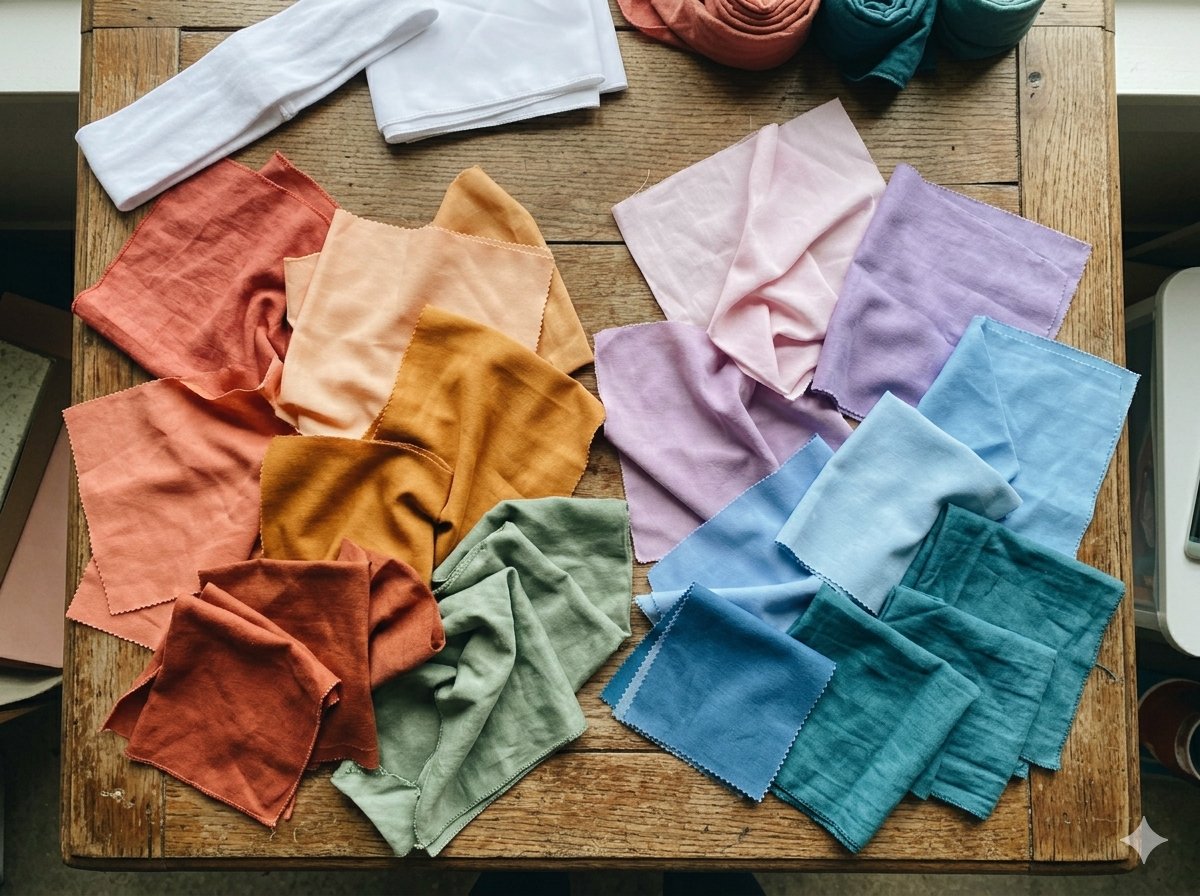
Drapes are the core tool of any colour analysis practice. You hold them one by one near your client's face to observe how their skin responds to different colour families, which shades bring luminosity and which create shadows or dullness. Starter kits typically contain 5–12 drapes, whilst professional sets offer 18–30. The recognised standard size for professional use is 50x70 cm, providing enough coverage across the neckline and jaw to assess the effect accurately. You can read more about the theoretical foundations of seasonal colour analysis on Wikipedia.
Colour fans for clients
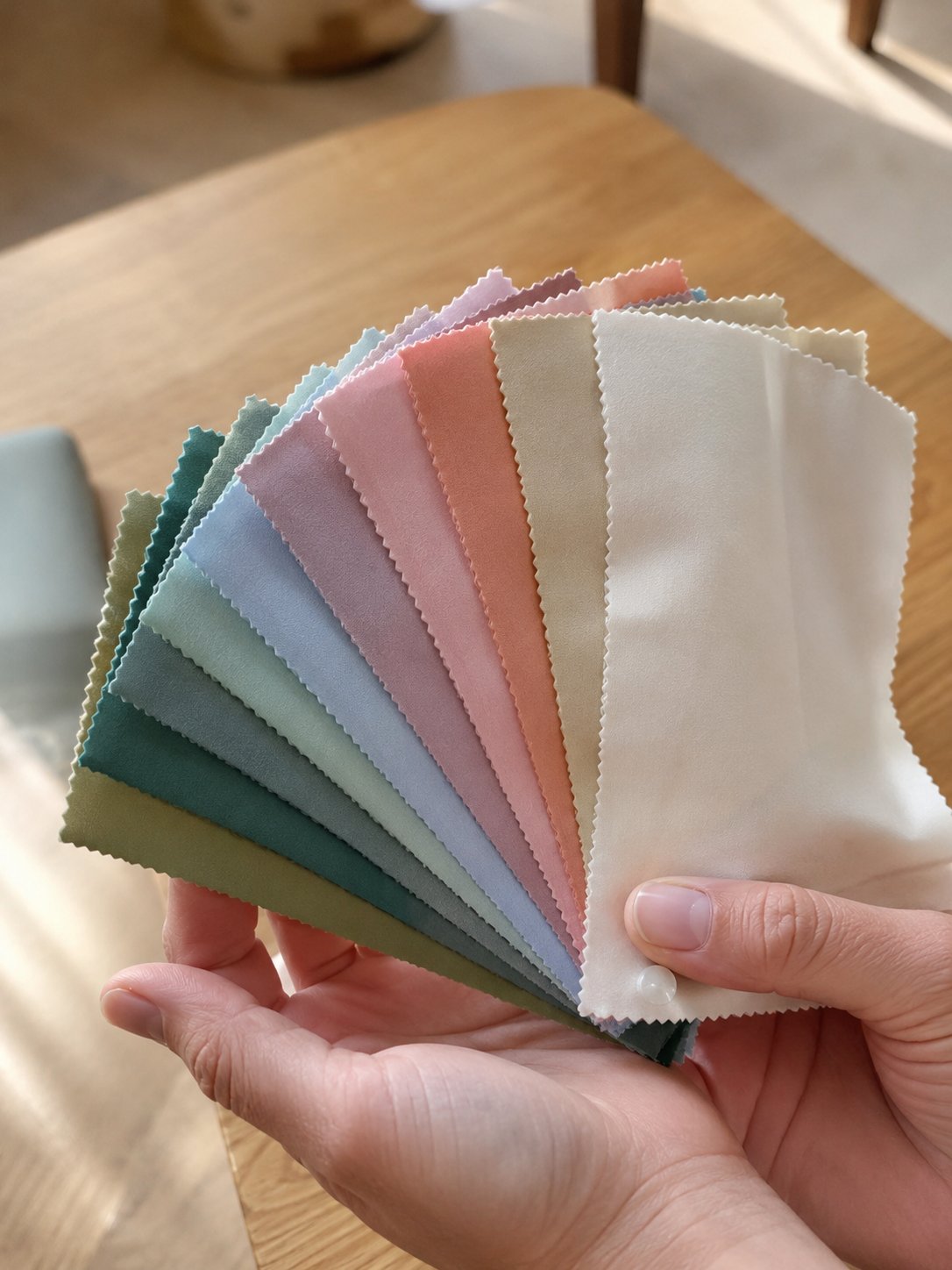
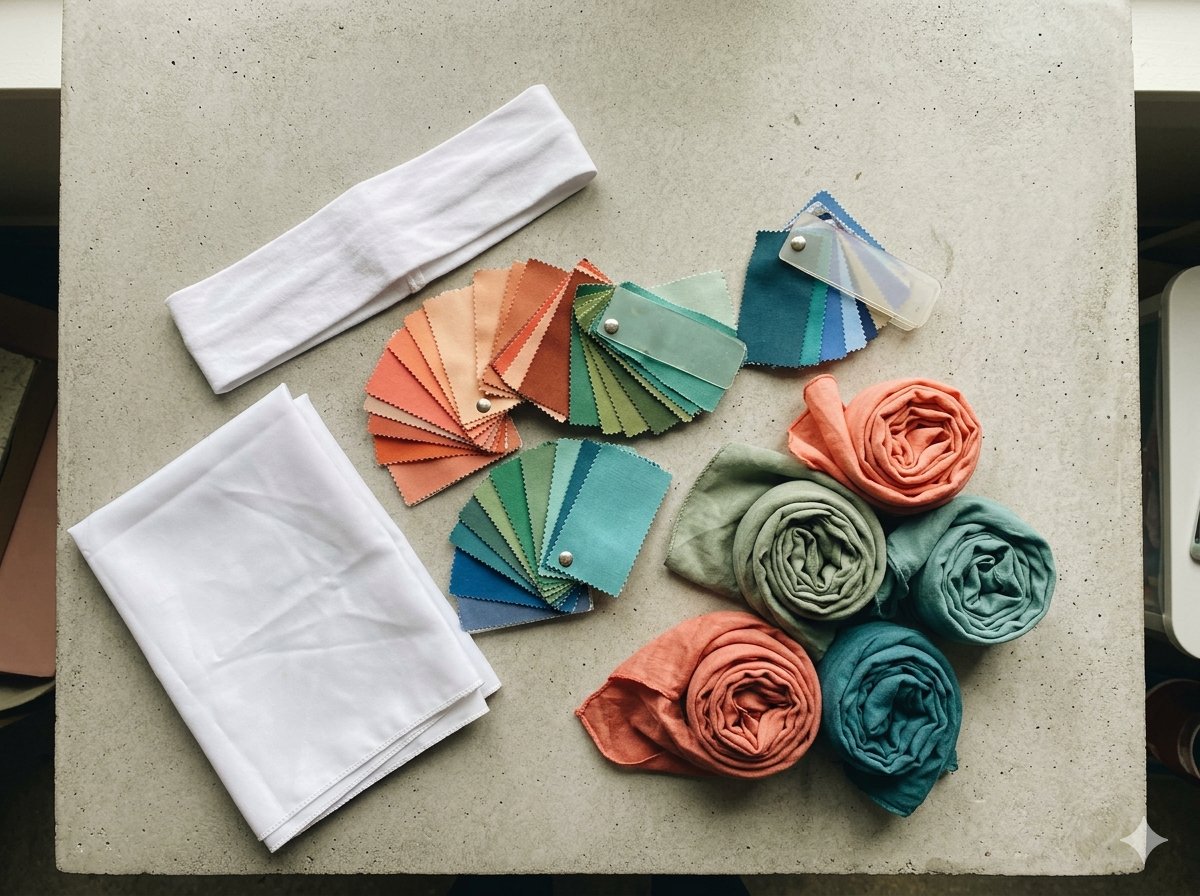
After the analysis, clients take away a personalised colour fan, a pocket-sized swatch set showing their seasonal palette. These are invaluable for shopping decisions, makeup selection, and wardrobe edits. Professional kits invariably include multiple versions of these fans (warm tones, cool tones, or a full seasonal palette).
The white headband: an underestimated essential
The white headband neutralises the influence of hair colour during the analysis, allowing a clean reading of the skin's reaction to each drape. It is one of the most important accessories in the kit, yet often missing from budget options. Without it, hair colour introduces a visual variable that can skew results.
Storage and organisation
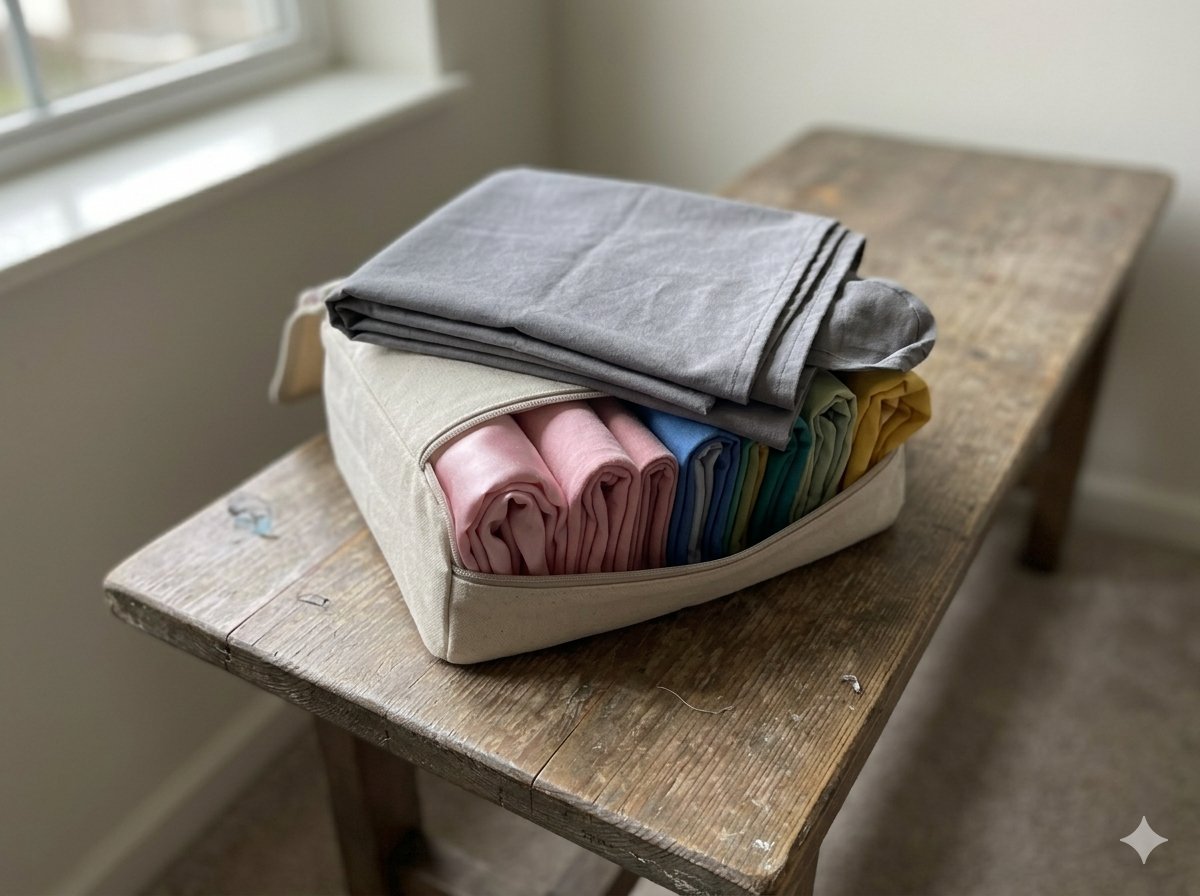
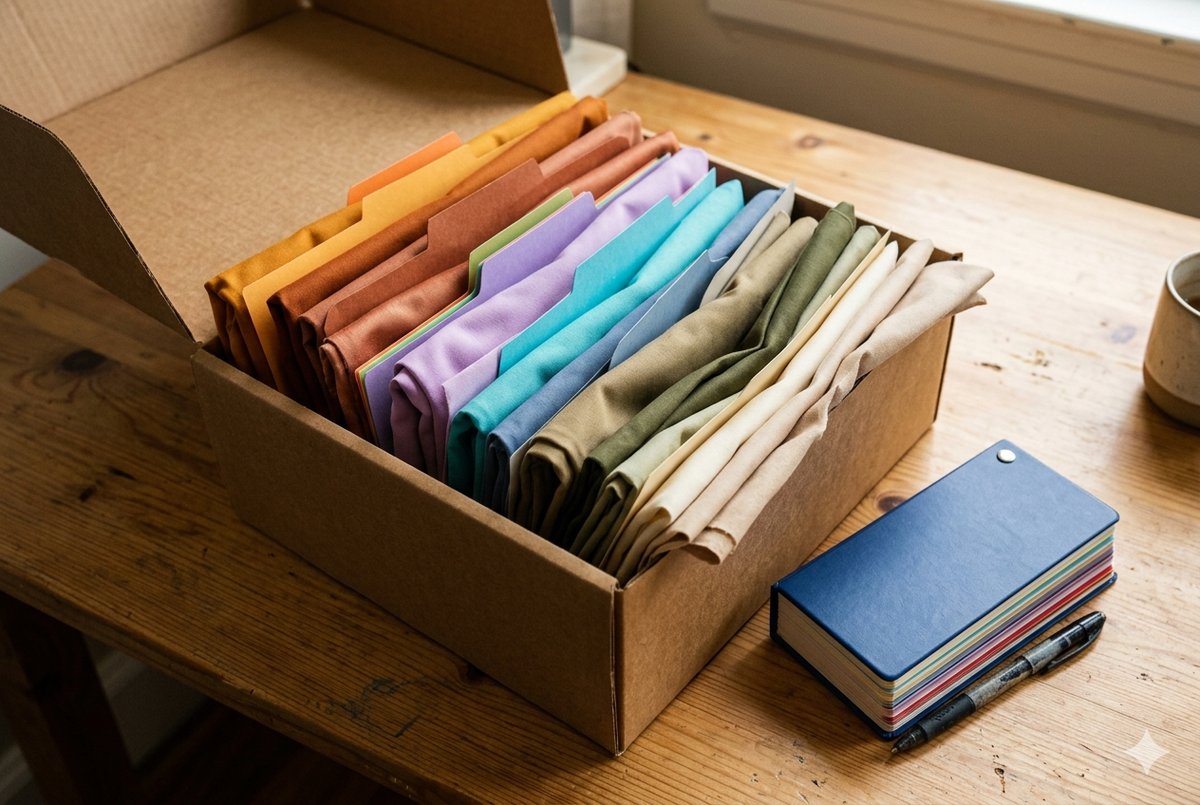
Quality kits include a rigid case or structured pouch to protect satin drapes from snags and dust. Colour analysts who visit clients at home or in salons across London, Manchester, Edinburgh, or elsewhere benefit enormously from well-organised storage, ideally arranged by season or colour temperature for quick access during consultations.
Beginner vs professional kits: which is right for you?
The gap between a starter and a professional colour analysis draping kit isn't simply about drape count, it reflects entirely different use cases and levels of diagnostic precision.
The beginner kit: exploring the method
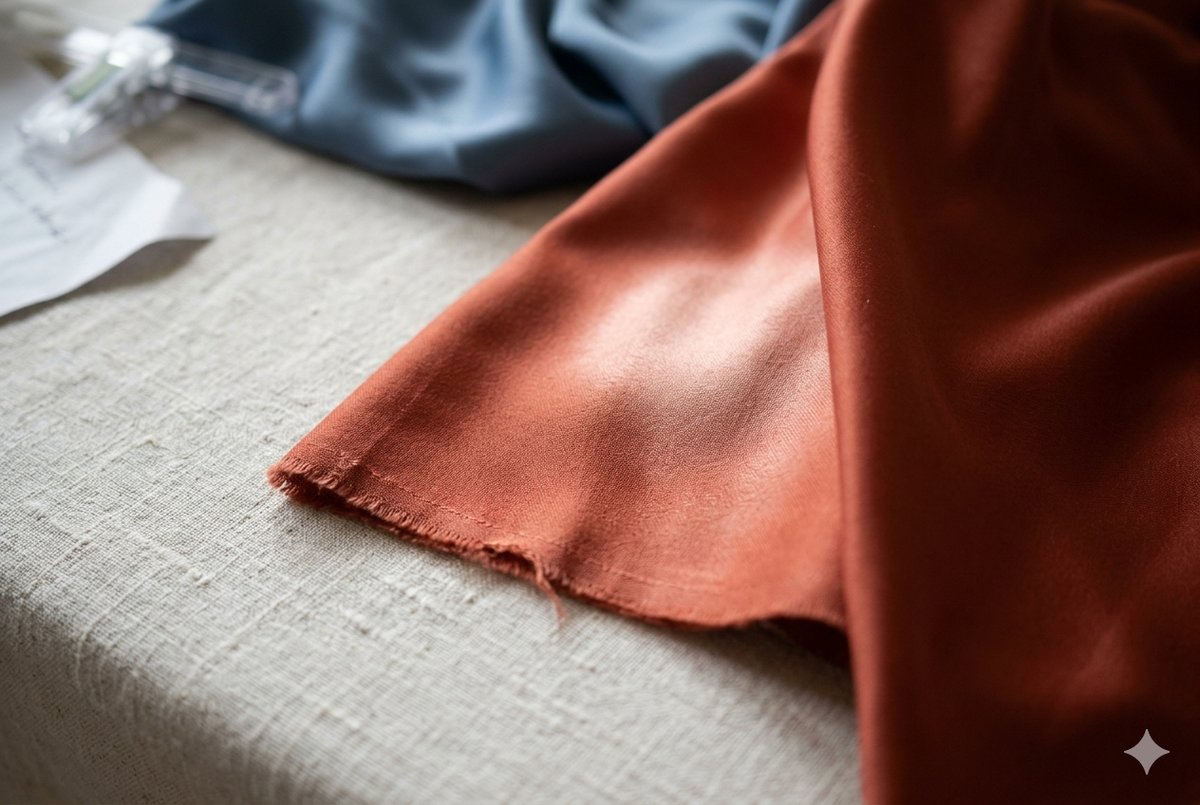
If you're starting out in colour analysis, perhaps for yourself, your family, or as part of a training course, a kit of 5 to 12 drapes is a perfectly reasonable entry point. These typically cover the four key seasonal palettes: a warm golden yellow for Spring, a muted rose for Summer, an earthy orange-brown for Autumn, and an icy blue-white for Winter. With this foundation, you can identify a person's dominant season and provide initial colour direction. It's also an effective way to practise and decide whether to invest further before committing to a larger set.
The professional kit: precision across sub-seasons
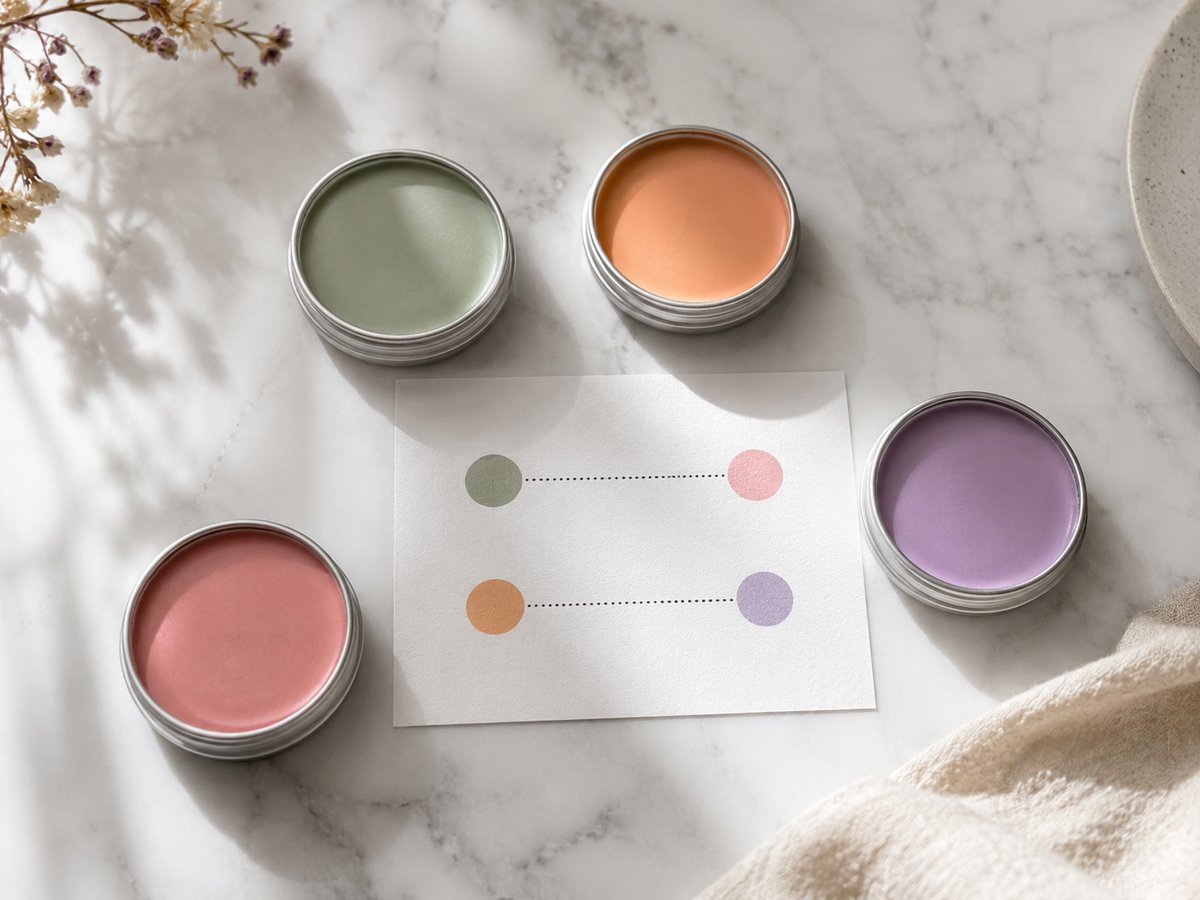
Once you begin working with paying clients or wish to refine diagnostics into sub-seasons (Light Spring, Soft Summer, Deep Autumn, Bright Winter, and so on), a set of 18 to 30 drapes becomes essential. The additional drapes include intermediate shades that distinguish, for example, a Warm Autumn from a Deep Autumn, two profiles with meaningful differences in their best colours. Professional kits also include pairs of test drapes (gold vs silver, peach vs rose, navy vs turquoise) that pinpoint undertone warmth and tonal depth. If you're serious about training as a colour consultant, this is the level to aim for from the outset. You can explore what a professional analysis involves in our guide to finding your best colours.
| Feature | Beginner Kit | Professional Kit |
|---|---|---|
| Number of drapes | 5–12 | 18–30 |
| Drape size | 60x36 cm or 50x50 cm | 50x70 cm |
| Method compatibility | 4-season system | 8 or 12-season system |
| Client colour fans | Sometimes included | Always included |
| Accessories | Basic headband | Headband + cape + case |
| Best for | Personal use, friends & family | Professional client consultations |
| Typical price (UK) | £85–£130 | £170–£350 |
Fabric and quality: satin, polyester, or cotton?
The fabric your drapes are made from has a direct impact on the accuracy of your colour readings. Here's what you need to know before buying.
Duchess satin: the professional benchmark
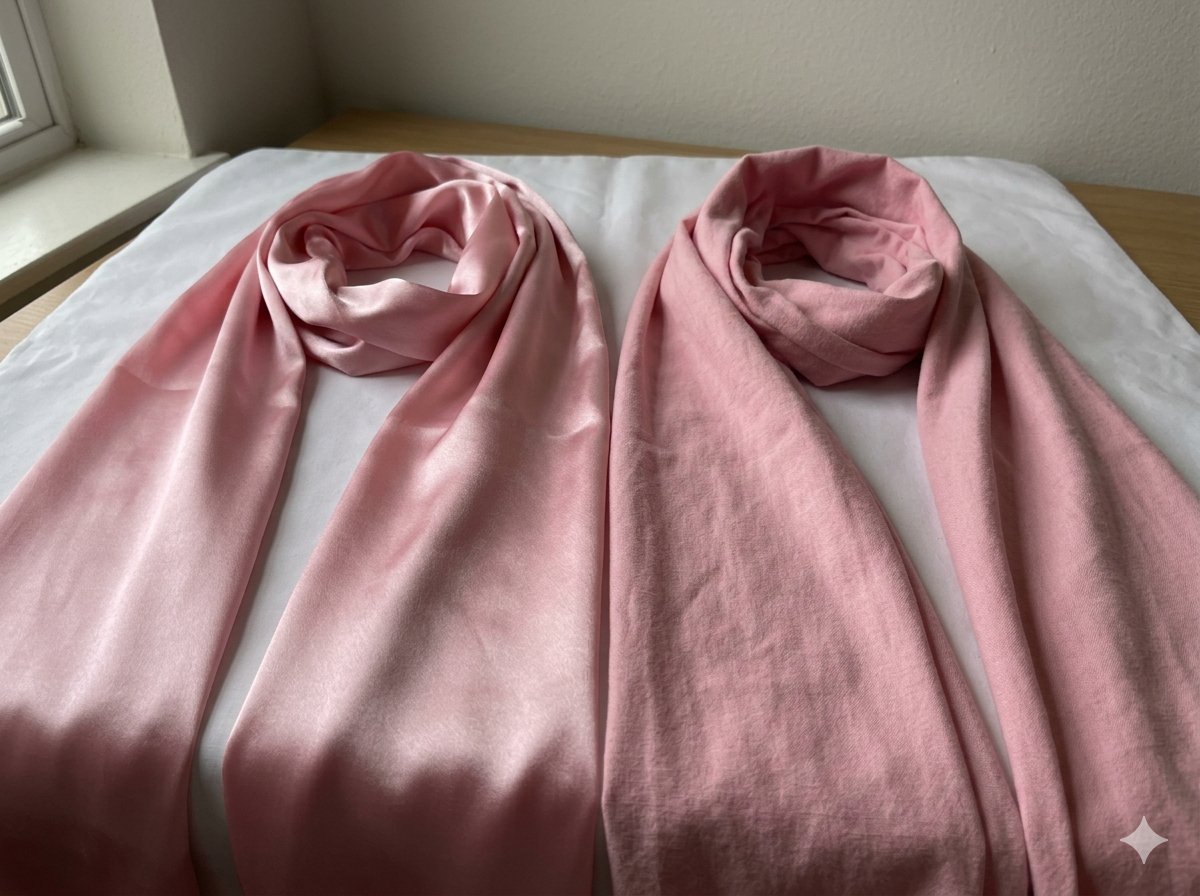
Duchess satin is widely regarded as the gold standard for colour analysis draping. Its smooth, luminous surface reflects light evenly, allowing you to observe precisely how each shade interacts with the skin's undertone. The fluid drape also makes it easy to hold and position near a client's face. That said, it comes at a premium: kits in genuine duchess satin typically cost £200–£350 and require hand-washing or dry-cleaning to preserve the colours over time. For full-time colour consultants in London, Birmingham, or Bristol who see multiple clients per week, the investment is well justified.
Premium polyester: a practical alternative
High-quality polyester with a satin finish is increasingly used in professional UK kits. The colour reproduction is highly satisfying, the fabric washes well, and the price point is more accessible. Look for clean hems, invisible overstitching, and consistent drape, these finishing details signal genuine quality. UK suppliers such as Improvability Colour Analysis Supplies and Style and Image offer well-made polyester draping sets at various price points.
Cotton: avoid it for draping
Cotton's matte surface absorbs light rather than reflecting it, which significantly compromises the visual reading of how colours affect the complexion. Cotton drapes also wrinkle easily and lose their vibrancy with use. If you come across a very cheap kit made from cotton, it is not a bargain, it simply won't give you reliable results. Save up a little longer and invest in a quality polyester set instead.
« The seasonal systems rely heavily on subjective comparison… The answer often depends on the consultant's personal eye, the lighting in the room, and even the quality of the fabric itself. »
How to choose your kit: key criteria
Armed with an understanding of fabric and kit structure, here are the practical criteria that should guide your final decision.
Your colour analysis method
There are three main approaches to seasonal colour analysis: the 4-season system (the classic starting point), the 8-season system (which adds Light and Deep variations), and the 12-season system (the most refined, adding Warm, Cool, and Neutral sub-categories). Your kit must align with the method you're learning or already practising. A 30-drape kit is unnecessary for a 4-season approach; conversely, training in the 12-season system with only 8 drapes makes nuanced analysis impossible.
Your intended use
Ask yourself honestly: will this kit be used for personal exploration and the occasional session with friends, or are you building a professional colour consulting practice? If you're still undecided, a mid-range kit of 12–18 drapes gives you room to grow without over-investing. If you're already established as an image consultant in London, Leeds, or Glasgow and adding colour analysis to your services, going straight to a professional set makes commercial sense. Browse our directory of colour analysis experts across the UK to see how other consultants have structured their offer.
UK-made or European manufacturing
Some suppliers, including Style and Image in the UK, manufacture drapes domestically, using precision-dyed fabric to ensure colour consistency. These tend to cost slightly more but offer superior durability and truer colour over time. For consultants who want to emphasise quality and provenance in their marketing, this is a meaningful differentiator.
Price ranges and buying strategy
Understanding the UK market price brackets helps you spot good value and avoid overpriced or underpowered kits.
Under £25: the introductory set
These entry-level sets contain 4–5 small fabric squares (typically 30x30 cm) in basic polyester, with no accessories. They are useful as a visual learning aid to grasp the concept of seasonal draping, but they won't produce reliable diagnostic results. If your budget is tight, wait until you can comfortably afford the next tier rather than starting with something that will frustrate you.
« Instructions could be more detailed, especially for beginners. Color recommendations too generalized for unique needs. Not suitable for advanced users or those with complex styling needs. »
£85–£130: the solid starter kit
This range gives you genuine value for money. Expect 10–12 quality drapes in finished sizes (50x50 cm or 60x36 cm), a white headband, and sometimes a set of colour fans. Many kits at this level are modular, meaning you can purchase additional drapes separately as your practice evolves. This is the right entry point for serious beginners, trainees on colour analysis courses, or image consultants adding a new service.
£170–£350: the professional set
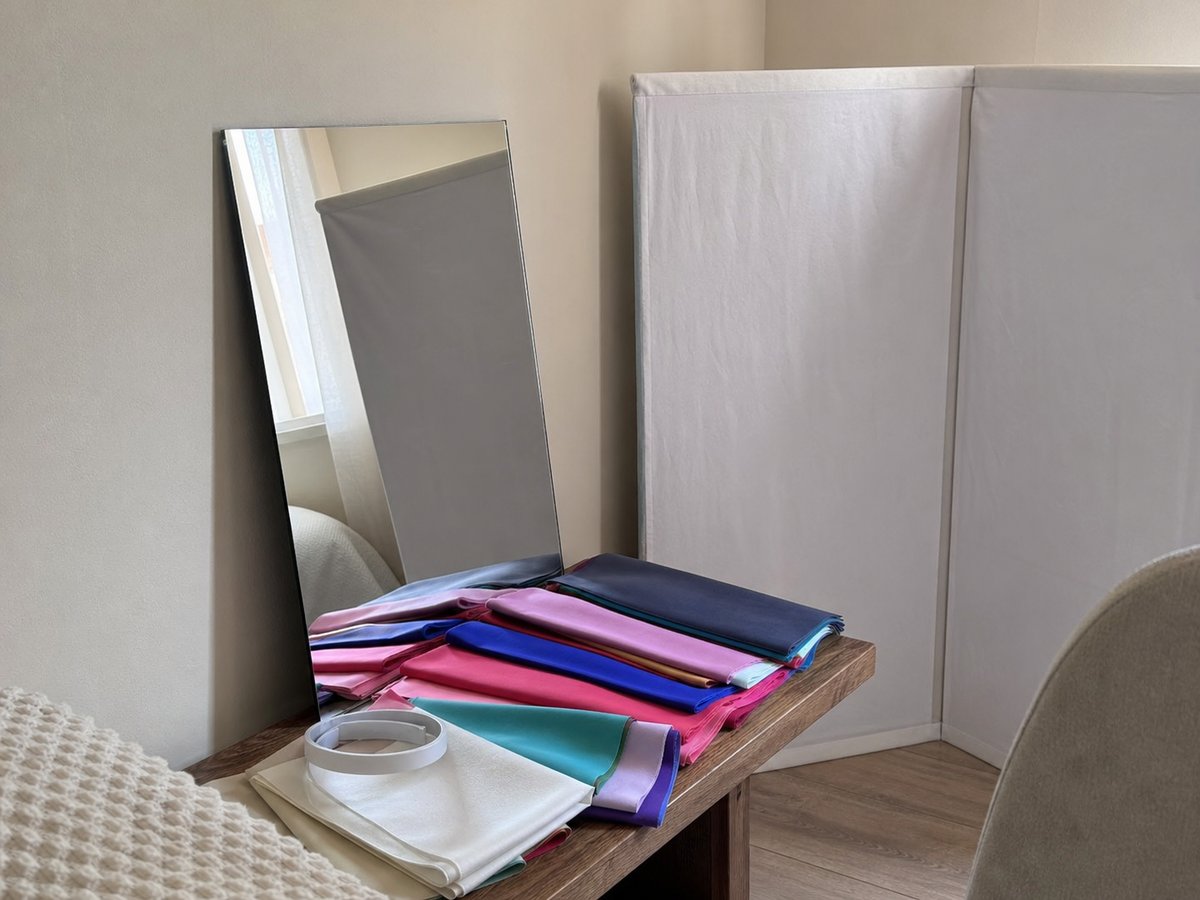
Top-tier kits feature 18–30 drapes in duchess satin or premium polyester at the full 50x70 cm professional size, plus a complete set of accessories: white headband, protective cape, structured storage case, client colour fans in multiple formats, and a methodology guide. Colours cover the full spectrum including neutrals (beige, taupe, khaki) and accent shades (terracotta, violet, fuchsia). Designed for intensive professional use, these sets are built to last and support every advanced seasonal method.
« What truly set this training apart was the chance to master colour analysis without depending on drapes. »
A modular purchasing strategy
You don't need to spend £300 on day one. Several UK suppliers sell drapes individually or in small extension packs, allowing you to start with a core 12-drape set and add colours as your practice grows. After a few months of regular use, you'll know exactly which undertones and seasonal shades are missing. This approach also limits the risk of investing heavily in a field you're still exploring. For a deeper dive into seasonal colour theory, read our guide on Autumn colour analysis sub-types.
Frequently asked questions
How many drapes do I need to start doing colour analysis?
Ten to twelve drapes is a workable minimum for the 4-season system, at least two representative shades per season plus a handful of test colours (warm/cool, light/deep). With just 5 drapes you can understand the concept, but not conduct a genuine analysis. For sub-season work using 8 or 12 seasons, you'll need at least 18 drapes from the outset.
Is duchess satin worth the extra cost?
For full-time professional use with multiple clients per week, yes, duchess satin delivers the most accurate light reflection and the most polished client experience. For beginners or part-time practitioners, premium polyester with a satin finish offers comparable diagnostic accuracy at a more accessible price point. In either case, pay close attention to finishing quality: clean hems and even dye are the hallmarks of a reliable kit.
What's the actual difference between a £20 kit and a £250 kit?
A £20 kit typically contains 4–5 small fabric squares in basic polyester with no accessories and rough finishing. A £250 kit offers 20–30 drapes at full professional size (50x70 cm) in quality fabric, with a white headband, protective cape, client colour fans, structured storage, and a method guide. The difference lies in diagnostic accuracy, durability, and the overall experience you can offer clients.
Can I add drapes to a starter kit later?
Yes, provided you choose a supplier that sells individual drapes or extension packs. This is actually the recommended approach for most beginners: invest in a coherent 12-drape starter set, practise consistently for a few months, identify the shades you're missing, then expand selectively. It keeps your initial outlay manageable and ensures any additions reflect genuine need.
Where can I buy a professional colour analysis kit in the UK?
Several reputable UK suppliers cater to colour consultants at all levels. Improvability Colour Analysis Supplies (improvability.co.uk) and Style and Image (styleandimage.co.uk) offer quality draping sets with clear specifications. Kelly Tavora also supplies compact professional kits. Many colour analysis training courses in the UK recommend specific kit suppliers or include the kit in their course fee, worth checking before you buy independently.
Do I need a specific kit for the 12-season method?
Yes. The 12-season system requires at least 24 drapes that cover all intermediate shades, plus dedicated test pairs for assessing warmth, depth, and clarity. Check that the kit description explicitly lists the 12 sub-seasons and includes opposing test colours (gold/silver, peach/rose, etc.). Your training provider will always specify which kit configuration is required for their method, consult them before purchasing.
Choosing the kit that matches your journey
Whether you're exploring colour analysis out of personal curiosity, beginning a training course, or expanding an established image consulting practice, the right kit is the one that matches where you are right now, and where you want to be. A 10–12 drape polyester set at £100–£130 is an excellent starting point for the 4-season system. If you're committed to professional colour consulting, investing directly in a 20–30 drape set at £200–£300 will serve you far better in the long run.
Prioritise fabric quality and finishing over sheer drape count. A set of 15 beautifully made duchess satin or premium polyester drapes will produce more accurate results than 30 poorly dyed fabric squares. And if in doubt, choose a modular kit that lets you grow at your own pace.
Ready to experience a professional colour analysis conducted with top-quality equipment? Discover our directory of colour analysis experts across the UK, from London to Edinburgh, Manchester to Bristol.